
- All
- Product Name
- Product Keyword
- Product Model
- Product Summary
- Product Description
- Multi Field Search


Views: 214 Author: Site Editor Publish Time: 2025-12-07 Origin: Site


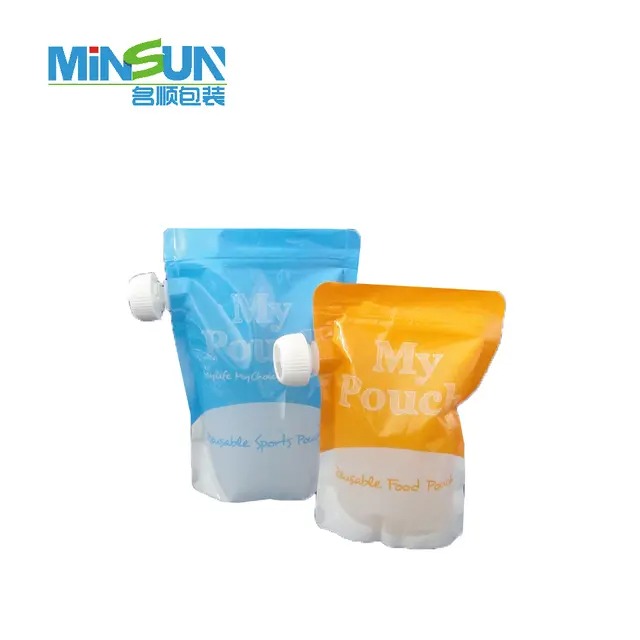
Spout pouches have become a cornerstone in modern packaging, offering flexibility, portability, and convenience across industries such as food, beverages, cosmetics, and cleaning products. Their popularity stems from their lightweight structure, extended shelf life, and cost-effectiveness compared to rigid packaging formats. However, as sustainability becomes a global priority, consumers and businesses alike are asking whether spout pouches align with circular economy principles. Understanding the recyclability of spout pouches requires exploring their materials, current recycling infrastructure, and emerging innovations that could reshape their role in a sustainable packaging ecosystem.
Spout pouches are not single-material products. They are engineered using laminated films that combine multiple layers, each serving a different purpose—barrier protection, printability, and sealing strength. Typical materials include polyethylene (PE), polypropylene (PP), polyester (PET), and aluminum foil. The spout itself is usually made from rigid plastic, which further complicates recycling.
| Layer | Material | Function |
|---|---|---|
| Outer Layer | PET or Nylon | Durability, print surface |
| Barrier Layer | Aluminum foil or EVOH | Prevents oxygen/moisture penetration |
| Inner Layer | PE or PP | Heat sealing, food safety contact |
| Closure Component | HDPE or PP spout | Resealability, dispensing |
Because these layers are bonded together, separating them for recycling is technologically challenging. Traditional recycling systems are designed to handle single-material streams, making spout pouches less compatible with existing infrastructure.

At present, most municipal recycling programs do not accept spout pouches due to their mixed-material composition. Even when some components are recyclable, the difficulty lies in processing laminated films and rigid spouts together. Consequently, the majority of used pouches end up in landfills or incinerators.
However, specialized recycling initiatives are emerging. Some companies partner with programs like TerraCycle to create take-back systems where consumers return used pouches for advanced recycling. Chemical recycling technologies, which break plastics down into their molecular form, are also being tested as solutions for laminated packaging waste.
While progress exists, accessibility remains limited to certain regions, and widespread adoption is not yet achieved. For most consumers, the practical answer is that spout pouches are still largely non-recyclable through curbside collection.
To evaluate the recyclability of spout pouches, it is useful to compare them with alternative formats such as rigid plastic bottles, glass jars, and cartons.
| Packaging Type | Recyclability | Carbon Footprint | Transportation Efficiency |
|---|---|---|---|
| Spout Pouches | Limited, emerging solutions | Low (lightweight, less raw material) | High (space-saving, lightweight) |
| Plastic Bottles | Widely recyclable | Higher due to bulkier plastic | Medium |
| Glass Jars | Highly recyclable | Very high due to weight | Low (heavy, fragile) |
| Cartons (e.g., Tetra Pak) | Partially recyclable, requires specialized facilities | Medium | Medium |
This comparison highlights a paradox: while spout pouches score poorly on recyclability, they often outperform rigid packaging in terms of carbon footprint and resource efficiency. This makes them a complex but important element in discussions about sustainable packaging.
Recognizing the recycling challenges, packaging manufacturers are investing in research and development to create recyclable spout pouches. Several strategies are emerging:
By using a single material such as polyethylene for both the film and the spout, companies aim to create pouches that fit into existing recycling streams. Mono-material designs reduce complexity and improve compatibility with mechanical recycling.
Some manufacturers are experimenting with bio-based films and compostable materials. While promising, these solutions face challenges regarding shelf life, food safety standards, and limited composting infrastructure.
Collaborations with chemical recycling facilities open the door to recycling laminated films by breaking them down into virgin-quality raw materials. Though still in development, this could transform the recyclability landscape for spout pouches.
These innovations represent progress, but they also require systemic changes—investment in recycling infrastructure, clear labeling, and consumer education.
Recyclability is not just about packaging design; it is also about collective action. Brands can contribute by adopting recyclable pouch formats, partnering with collection programs, and clearly labeling packaging with disposal instructions.
Consumers, on the other hand, play a critical role by participating in take-back programs, reducing reliance on single-use packaging, and supporting brands committed to sustainable practices. In the absence of universal recycling options, behavioral changes such as bulk purchasing or reusable alternatives can mitigate environmental impact.
Governments worldwide are introducing extended producer responsibility (EPR) schemes and stricter packaging waste regulations. These policies push manufacturers to take responsibility for the end-of-life stage of their products, including spout pouches.
For example:
European Union: Packaging must be recyclable or reusable by 2030 under the Circular Economy Action Plan.
United States: Several states, including California, are implementing EPR laws that could affect pouch recyclability.
Asia-Pacific: Countries like Japan and South Korea are advancing chemical recycling infrastructure.
Such regulations are likely to accelerate innovation and adoption of recyclable pouch technologies while ensuring brands integrate sustainability into packaging strategies.
The journey toward recyclable spout pouches is ongoing and filled with technical and logistical hurdles. Yet, the momentum is clear. Mono-material solutions, chemical recycling, and policy interventions suggest that spout pouches may eventually integrate into mainstream recycling systems.
For now, spout pouches remain a transitional packaging format: environmentally advantageous in terms of resource efficiency but lagging in end-of-life management. The success of future recyclability efforts depends on collaboration among manufacturers, governments, and consumers.
Spout pouches are not widely recyclable today, primarily due to their multi-material composition. However, their lightweight and space-efficient design makes them an environmentally competitive choice compared to traditional packaging formats. Advances in mono-material technology, chemical recycling, and policy-driven initiatives are paving the way toward improved recyclability. Until these solutions scale, both businesses and consumers must balance convenience with environmental responsibility, supporting innovation while seeking ways to reduce waste.
1. Are all spout pouches non-recyclable?
Not all, but most spout pouches are currently difficult to recycle due to their laminated materials. Some new mono-material versions are being designed to fit into recycling systems.
2. Can I recycle spout pouches at home through curbside bins?
In most regions, no. Traditional recycling centers typically do not accept them. Specialized take-back programs or drop-off points may be available.
3. Are biodegradable spout pouches a better option?
They offer potential but depend on composting infrastructure, which is not widely accessible. Additionally, they may not provide the same durability or shelf life as conventional pouches.
4. Why are brands still using spout pouches if they are hard to recycle?
Because spout pouches reduce transportation emissions, use fewer raw materials, and extend product shelf life, making them efficient despite recyclability challenges.
5. What should consumers do with used spout pouches today?
Check if local recycling programs or brand partnerships exist. If not, consider reducing usage, opting for larger pack sizes, or supporting companies offering recyclable or refillable alternatives.


