
- All
- Product Name
- Product Keyword
- Product Model
- Product Summary
- Product Description
- Multi Field Search
Views: 0 Author: Site Editor Publish Time: 2026-05-15 Origin: Site


Preserving food freshness requires precise material science and manufacturing consistency. Every day, brands face tough logistical challenges. They must extend shelf life without inflating supply chain expenses. A standard package might look great initially on the retail shelf. Poor material choices, however, quickly lead to staleness and product spoilage. Brands invest heavily in product development and marketing. You cannot afford to let subpar film ruin those efforts. You need a reliable, highly efficient containment solution.
A three side seal pouch offers a highly effective, low-waste format. Success depends heavily on specifying correct material properties. You must also ensure absolute seal integrity for your specific application. The wrong film thickness causes immediate production delays.
This article provides procurement teams an evidence-based framework. You will learn how to evaluate, specify, and source these flexible formats. We will explore material layers, machinery compatibility, and quality testing protocols. Our guide helps you confidently navigate complex purchasing decisions. You will learn exactly how to align marketing aesthetics with engineering realities.
Material Architecture: Optimal freshness relies on a three-layer laminated structure (Outer print layer, Middle barrier layer, Inner sealant layer).
Operational ROI: Three side seal pouches reduce storage footprint significantly compared to rigid packaging and offer better volumetric efficiency than four side seal alternatives.
Automation Compatibility: Pre-formed three side seal pouches integrate seamlessly with standard continuous band sealers, while roll stock suits high-speed VFFS/HFFS lines.
Quality Assurance: Validating Oxygen Transmission Rate (OTR), Water Vapor Transmission Rate (WVTR), and seal integrity prevents costly downstream recalls.
Selecting the right laminate structure determines your product shelf-life. You must evaluate requirements based on expected environmental exposures. Oxygen, UV light, and moisture threaten food quality daily. A proper three-layer material architecture neutralizes these threats completely. We design flexible films using a highly specific sandwich structure. Each layer performs an independent, crucial function.
Packaging engineers rely on specific materials for the outer layer. This layer ensures printability and robust physical protection. It also dictates the consumer tactile experience.
PET (Polyethylene Terephthalate): It provides high tensile strength. It offers excellent heat resistance during the sealing process. You will find it is a superb substrate for high-gloss or matte printing. Ink traps beautifully beneath this layer.
BOPP (Biaxially Oriented Polypropylene): This material delivers high transparency. It also gives you exceptional puncture resistance. Snack brands frequently use BOPP for windowed designs.
Kraft Paper: Kraft offers a highly tactile, natural aesthetic. It feels rustic in the consumer's hand. It is highly popular for organic food packaging bag lines.
The middle layer acts as the absolute barrier. It stands between your delicate product and the outside world. This layer stops degradation mechanisms in their tracks.
Aluminum Foil (AL) or Metallized PET: These choices offer maximum defense. They block UV light, oxygen, and ambient moisture entirely. Coffee roasters depend heavily on aluminum to prevent staling.
EVOH and Nylon (PA): These deliver high-performance oxygen blockades. They work perfectly for vacuum-sealed or gas-flushed applications. Nylon adds extreme durability against bone-in meat punctures.
Finally, the inner layer functions as the primary sealant. It melts slightly under pressure to close the bag securely.
PE (Polyethylene) and CPP (Cast Polypropylene): These act as food-safe contact layers. Engineers design them for consistent heat activation. They guarantee leak prevention in the final sealed pouch. The thickness of this layer dictates overall seal burst strength.
You can visualize typical laminate combinations in the table below.
Application Need | Outer Layer | Barrier Layer (Middle) | Sealant Layer (Inner) |
|---|---|---|---|
High-Barrier (Coffee/Meat) | PET | Aluminum Foil (AL) | PE (High Micron) |
Organic Aesthetic (Nuts) | Kraft Paper | Metallized PET (VMPET) | CPP |
Clear Display (Snacks) | BOPP | EVOH / Nylon | PE (Standard Micron) |
Manufacturers create this format by folding a single web of film. This clever folding process yields three sealed sides and one continuous fold. It directly results in higher internal volume compared to four side seal alternatives. You gain more internal space for the exact same amount of material. This mathematical advantage reduces your overall material spend significantly.
Logistics and storage optimization represent massive operational advantages. Empty pouches ship and store completely flat. This high-density stacking reduces your warehouse footprint dramatically. You can fit millions of empty bags onto a single truck. Contrast this with bulky glass jars or rigid plastic tubs. It radically lowers freight emissions by maximizing pallet space during transit. Your carbon footprint drops alongside your freight bills.
Downstream automation thrives on consistency. High dimensional uniformity makes the three side seal bag highly predictable. Robotic suction cups grip flat surfaces easily. You can run automated secondary cartoning smoothly. Retail case packing becomes faster and much less error-prone. Equipment jams drop significantly when material dimensions remain strict.
Consider the operational differences highlighted in this comparison chart.
Feature Category | 3-Side Seal Format | 4-Side Seal Format |
|---|---|---|
Manufacturing Method | Folded single web film | Two separate webs sealed |
Internal Volume Ratio | Higher (fold allows expansion) | Lower (all sides pinched tight) |
Warehouse Storage Efficiency | Excellent (lays completely flat) | Good (but four seals add bulk) |
Automated Cartoning Speed | Very High (predictable folded edge) | High (requires careful alignment) |
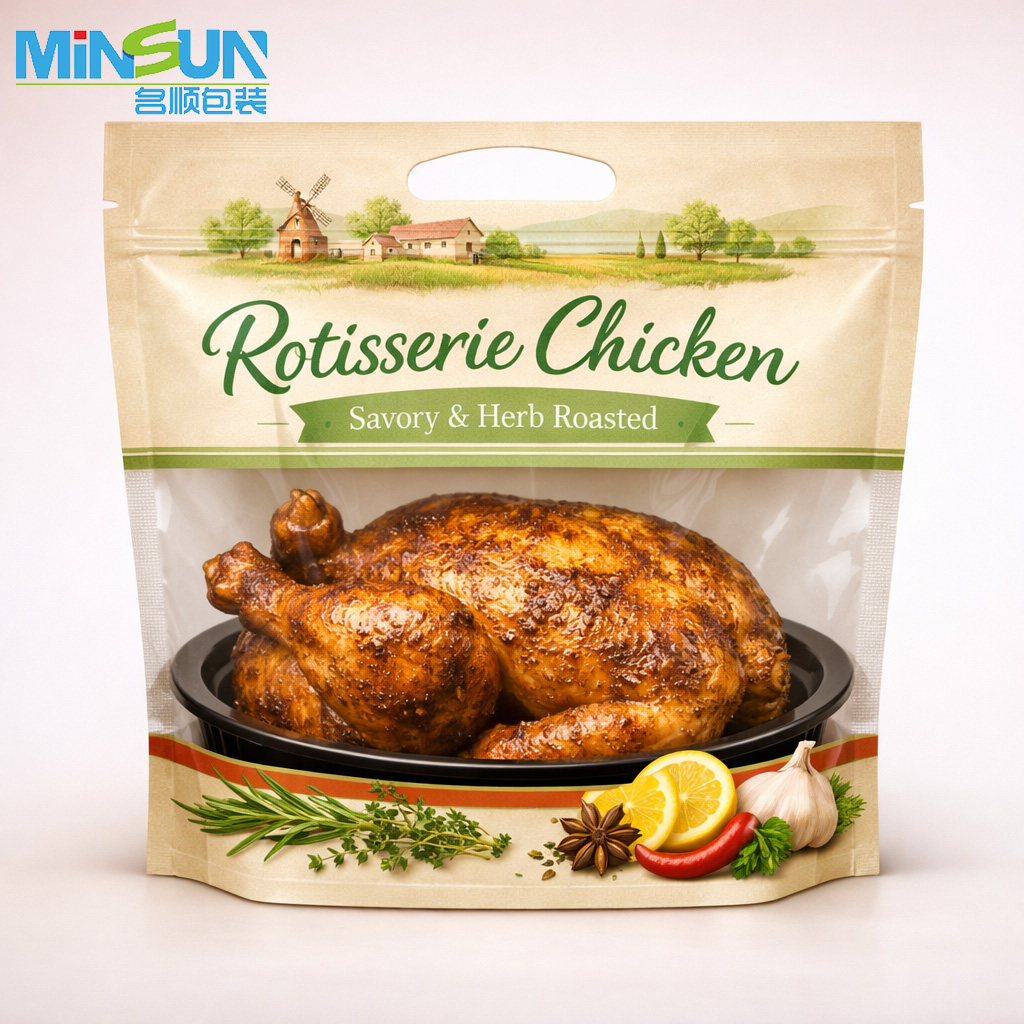
Modern consumers demand superior user experiences. You can enhance satisfaction through specific value-add modifications. A simple bag transforms into a premium brand asset easily.
Reclosability options: Press-to-close zippers are an industry standard. Velcro-style closures work excellently for multi-serving powder products. These closures prevent pantry spills perfectly.
Accessibility enhancements: Laser scoring provides clean, straight tearing lines. Tear notches allow for predictable, tool-free opening by the end user. Frustration-free opening builds immense brand loyalty.
Retail display advantages: Euro slots (hang holes) fit standard retail pegboards seamlessly. Clear product windows build instant consumer trust on the shelf. Shoppers love seeing the actual product inside.
Compliance and security dictate your material sourcing absolutely. Food safety requires ensuring all materials meet strict FDA or GMP compliance. They must be certified safe for direct food contact. Chemical migration from film to food is strictly prohibited. You must specify a certified food grade pouch to avoid severe legal liabilities.
Certain markets face heavily regulated environments. Pharmaceuticals, supplements, and CBD edibles are prime examples. They demand child-resistant (CR) zippers. This essential feature requires certified barrier packaging that actively prevents accidental opening by minors. A certified CR zipper adds structural complexity but guarantees market access. Regulatory bodies test these locking mechanisms rigorously.
Implementation realities often dictate packaging choices entirely. You must perfectly match the pouch format to existing or planned machinery. A mismatch causes severe production bottlenecks and wastes capital. You need harmony between the flexible material and the metal jaws.
High-speed automated lines rely primarily on continuous roll stock.
VFFS (Vertical Form Fill Seal): This equipment gravity-feeds product downward. It is ideal for granules, powders, and free-flowing liquids. The machine pulls film over a forming collar. It forms the bag around a vertical tube instantly. A heated jaw then clamps horizontally.
HFFS (Horizontal Form Fill Seal): This machinery operates horizontally along a flighted conveyor. It is best for solid items requiring precise physical positioning. Baked goods, candies, and medical devices usually run on HFFS lines. The film wraps around the product laterally.
Many facilities utilize pre-formed pouch equipment instead. This approach lowers upfront machinery costs.
Continuous Band Sealers: These machines provide efficient, high-volume closure for pre-filled bags. They apply steady heat through Teflon bands as bags move along a conveyor belt. Operators simply feed the open end into the slot.
Vacuum Sealers: They extend shelf life dramatically through active oxygen removal. You must extract ambient air before creating the final sealing bag closure. Chamber vacuum sealers work brilliantly for large meat cuts. This process prevents aerobic bacterial growth and fat oxidation.
A credible supplier must demonstrate robust Quality Assurance processes. You need strict testing to prevent catastrophic field failures. Risk mitigation begins at the manufacturing level long before filling. An unchecked defect can ruin thousands of finished goods.
Standard performance tests validate the structural integrity.
Seal Integrity and Burst Testing: Technicians apply uniform internal air pressure via specialized nozzles. They ensure the seals withstand sudden distribution shocks and stacking weight. The film should stretch before the seal actually pops.
Barrier Validation: Laboratories test Oxygen Transmission Rate (OTR). They also measure Water Vapor Transmission Rate (WVTR) using testing chambers. Results must fall strictly within specified engineering tolerances. A high OTR means rapid staling.
We strongly recommend actively monitoring for common manufacturing defects. Catching these early saves massive amounts of money.
Defect Type | Description & Visual Symptom | Root Cause / Prevention |
|---|---|---|
Delamination | Separation of laminated film layers. Looks like loose plastic. | Caused by improper adhesive curing or solvent retention during lamination. |
Blistering | Bubbles forming across the heat seal area. | Overheating during the pouch conversion process boils the inner PE layer. |
Stringy Seals | Plastic threads pulling away from the bag edge. | Sealant layer melting unevenly; requires strict jaw temperature calibration. |
Leaker Seals | Micro-channels allowing internal air or liquid escape. | Inadequate jaw pressure or foreign product particles stuck in the seal zone. |
Finalizing packaging specifications demands a balanced decision framework. You must carefully weigh barrier performance, aesthetic needs, and machinery compatibility. No single material structure perfectly fits every single application. Therefore, strict adherence to engineering principles guarantees long-term success. Your final material choice dictates shelf presence and product safety entirely. Cross-functional alignment prevents costly redesigns later.
Take these concise action-oriented next steps:
Request technical data sheets (TDS) for all proposed material structures from your supplier.
Order unprinted physical samples to run aggressively on your existing filling equipment.
Validate real-world seal integrity through burst testing during your initial sample runs.
Verify exact Minimum Order Quantities (MOQs) and standard production lead times.
Confirm the supplier possesses current FDA or GMP compliance certifications for direct contact.
A: Yes, provided the inner sealant layer (usually PE) is gauged correctly. The seal width must be sufficient to prevent leaks under hydrostatic or hydraulic pressure. You should also specify heavy-duty burst testing during the quality assurance phase to guarantee performance.
A: Traditional multi-material laminates (e.g., PET/AL/PE) are generally non-recyclable due to layer separation difficulty. However, transitioning to mono-material structures (all-PE or all-PP) allows them to meet strict recyclable standards easily.
A: A three side seal pouch lays flat and is ideal for single-use or thin-profile items. A flat bottom pouch features side gussets and a flat base. This design allows it to stand upright independently for maximum shelf presence and larger volumes.


