
- All
- Product Name
- Product Keyword
- Product Model
- Product Summary
- Product Description
- Multi Field Search
Views: 0 Author: Site Editor Publish Time: 2026-05-22 Origin: Site


Food export supply chains push packaging structures to their absolute limits. Ocean freights expose goods to extreme temperature swings, high humidity, and aggressive multi-stage handling. Choosing an inadequate packaging structure puts sensitive food products at severe risk. Weak barrier properties or failing seals lead directly to compromised shelf life, spoilage, and expensive product recalls.
Fortunately, sourcing a three side seal pouch wholesale delivers a highly efficient, cost-effective resolution. You can protect your margins and your product if you explicitly match barrier materials and seal integrity to the export environment. Packaging engineers and procurement teams must analyze structural mechanics before placing large orders.
This guide objectively evaluates the barrier performance, structural mechanics, and operational efficiency of these pouches against alternative formats. You will learn how to decode transmission rates, optimize automated filling speeds, and mitigate transit-induced defects. We aim to support your evidence-based procurement decisions and ensure global supply chain resilience.
Three side seal pouches provide a 15–20% reduction in material costs and significantly faster automated filling speeds (VFFS/HFFS) compared to 4-side seal alternatives.
Export viability depends heavily on specific lamination structures (e.g., PET/AL/PE) to control Water Vapor Transmission Rate (WVTR) and Oxygen Transmission Rate (OTTR).
While highly versatile, three side seal pouches require rigorous QA testing (burst, vacuum, peel) to mitigate transit-induced defects like delamination or leaker seals.
Selecting a wholesale partner requires verifying FDA/EU food-grade compliance, heat-seal consistency, and automated packaging compatibility.
Understanding basic geometry helps you optimize pallet loads. Manufacturers seal this pouch on the left, right, and bottom sides. They leave the top edge open. This open top allows for high-speed automated filling on your production lines. Once filled, the machine heat-seals the final edge to secure the product.
This structural format lacks a bottom gusset. As a result, it creates a compact, completely flat profile. This flat shape is highly advantageous in export logistics. It eliminates dead space inside shipping cartons. You can pack more units per cubic meter. When freight volume dictates your profit margins, maximizing pallet space becomes critical. Because it minimizes material waste, this design serves as an incredibly efficient wholesale food pouch for international distribution.
However, you must acknowledge known limitations. The pouch relies entirely on three seams for its structural support. Heavy, bulky, or irregularly shaped products may cause the bottom seam to bulge. Without a gusset to distribute weight, excessive internal pressure stresses the bottom seal. We recommend this format primarily for lightweight powders, single-serve liquids, flat snacks, and portion-controlled dry goods.
Material science directly determines export survival. Food packaging must maintain strict control over two critical metrics. These are Water Vapor Transmission Rate (WVTR) and Oxygen Transmission Rate (OTTR). High moisture causes clumping in powders and mold in organic goods. High oxygen exposure leads to lipid oxidation, turning fats rancid. You must specify laminations based on your product's sensitivity.
We classify material combinations into distinct performance tiers. Each tier addresses specific supply chain stressors.
Performance Tier | Lamination Structure | Key Benefits | Ideal Export Application |
|---|---|---|---|
Standard Barrier | PET/PE or BOPP/PE | Good moisture resistance, high clarity, low cost. | Short-haul exports, high-turnover snacks, dry beans. |
High Barrier | PET/VMPET/PE or EVOH integration | Effective oxygen and light barrier, metalized aesthetic. | Long transit routes, moisture-sensitive powders, teas. |
Maximum Barrier | PET/AL/PE (Aluminum Foil) | Unmatched protection against UV rays, oxygen, and water vapor. | Premium exports, roasted coffee, pharmaceutical powders. |
High-Durability | PA/Nylon/PE | Maximum puncture resistance, high cold-stress tolerance. | Cold chain logistics, frozen foods, vacuum-sealed items. |
Always request a Material Data Sheet (MDS) from your supplier. The MDS details exact WVTR and OTTR values. Do not guess these numbers. A standard PET/PE bag might show an OTTR of 50 cc/m². An AL foil structure drops that to less than 0.1 cc/m². Match these numbers to your required shelf life before placing a bulk order.
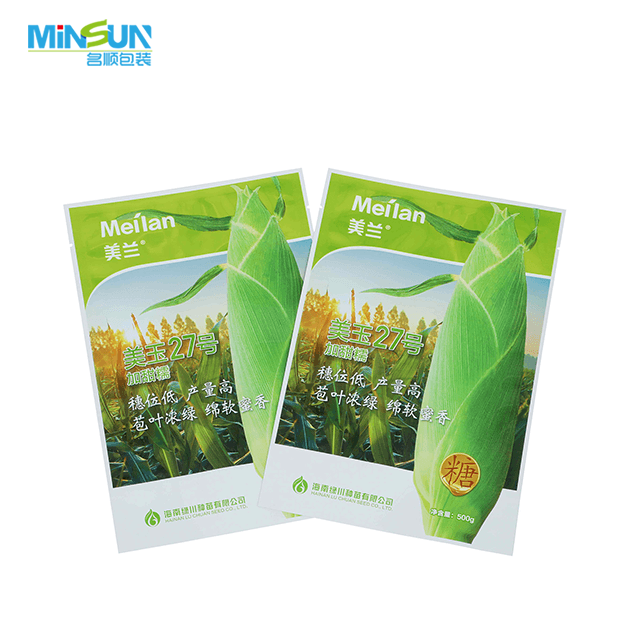
Buyers often debate between three-sided and four-sided seal designs. Let us evaluate barrier integrity objectively. Four-side seal pouches, also known as envelope pouches, seal all four edges equally. They offer continuous barrier continuity because they lack a top-fill processing seam during pouch conversion. This creates high rigidity and fewer potential leak paths. We recommend 4-side seals for extreme moisture-sensitive pharma products.
However, the standard three side seal pouch presents a massive ROI advantage. When manufactured with equivalent laminates, it achieves over 90% of the barrier performance found in four-sided alternatives. The trade-off is highly favorable. It offers a 10–20% material saving per unit. It also maintains a smaller physical footprint in shipping cartons.
To simplify your procurement process, we developed a practical decision matrix chart. Use this to determine the optimal balance for your project.
Selection Criteria | 3-Side Seal Recommendation | 4-Side Seal Recommendation |
|---|---|---|
Budget & Material Focus | Strict budget, optimizing material yield. | Premium budget, zero-tolerance for defects. |
Target Product Types | Snacks, spices, sauces, portion packs. | High-value pharmaceuticals, extreme hygroscopic powders. |
Supply Chain Rigor | Standard shipping, regional distribution. | Extreme handling, aggressive long-term global storage. |
Aesthetic & Rigidity | Compact, flat, flexible handling. | High rigidity, uniform symmetrical borders. |
Scalability dictates wholesale success. A core factor in procurement involves how your packaging runs on automated lines. Buying cheap bags means nothing if they jam your machines. You must evaluate implementation realities on Vertical Form Fill Seal (VFFS) and Horizontal Form Fill Seal (HFFS) equipment.
First, analyze the throughput metrics. Three-sided designs typically support impressive speeds. You can expect 120 to 180 bags per minute on modern VFFS or HFFS lines. They significantly outpace 4-side seal equipment. Multi-step four-sided machines generally average 80 to 130 bags per minute. Faster throughput reduces your labor costs and increases daily output.
Second, carefully manage machine interactions. Speed requires precision. High speeds can compromise barrier integrity if your parameters drift. Pay attention to these essential operational settings:
Servo-Driven Heat Seal Jaws: These provide precise, repeatable pressure. Inconsistent pressure leads to weak spots. Servo motors guarantee uniform clamping force across the entire seam width.
PID Temperature Control: Proportional-Integral-Derivative controllers stabilize the heating zones. If temperatures fluctuate, the inner PE layer might melt too much or fail to bond. PID controllers eliminate dangerous temperature swings.
Web Tension Dynamics: High-speed unwinding stretches the film. If tension is too high, the bag deforms. If it is too loose, the print registration fails. Calibrate tension rollers for specific film thicknesses.
Global exporting exposes seals to harsh conditions. Barometric pressure changes occur during high-altitude trucking or air freight. Pallet stacking puts immense weight on the bottom layers. Rough handling at ports tests mechanical strength. Risk mitigation requires strict quality control.
You must outline specific testing criteria. Demand verifiable QA protocols from your manufacturer. Do not accept visual inspections alone. Require these mechanical tests:
Burst Testing: This checks seal strength under dynamic pressure. Technicians inflate the pouch until it bursts. The failure point must exceed industry standards for your product weight.
Vacuum Leak Testing: Technicians submerge the pouch in a water chamber under a vacuum. Bubbles indicate micro-leaks. This guarantees hermetic sealing for long transit times.
Peel Testing: This ensures consistent lamination adhesion. It measures the force required to separate the film layers (e.g., PET from PE). Weak adhesion causes delamination during temperature swings.
Guide your incoming quality control (IQC) team to audit for specific manufacturing flaws. Watch out for these common defects that destroy barrier performance:
Blistering: Air or moisture becomes trapped in the seals during manufacturing. It looks like small bubbles along the edge.
Delamination: Laminated layers separate. This usually results from expired adhesives or improper curing times at the factory.
Stringy Seals: Also called angel hair. Melted polymer strings pull away from the jaws. This happens when sealing temperatures are set too high.
Crooked Seals: Misaligned web tracking causes skewed edges. This compromises structural integrity and looks unprofessional on retail shelves.
Sourcing reliable partners requires strict shortlisting logic. You need a manufacturer capable of producing consistent export packaging at scale. Use this framework to vet potential suppliers thoroughly.
First, verify their compliance and certification. Food safety is non-negotiable. The factory must possess verifiable FDA, EU, or relevant local food-safe certifications. Ask for third-party audit reports. Ensure they use food-grade inks and solvent-free lamination processes. Contaminated packaging will trigger immediate customs rejections.
Second, assess their customization depth. Can they integrate add-ons without compromising the barrier? Coffee requires one-way degassing valves to release carbon dioxide. Sauces require leak-proof spouts. Premium snacks need resealable zippers. Ensure the factory utilizes specialized equipment to ultrasonically weld these features securely.
Finally, evaluate capacity and Minimum Order Quantities (MOQs). Balance your budget against production limits. Standard MOQs for custom rotogravure prints typically range from 5,000 to 10,000 pieces. Digital printing offers lower MOQs but higher unit prices. Discuss their standard lead times, which usually run 10 to 15 days. Establish clear defect resolution policies in writing before signing purchase orders. A reliable partner replaces defective batches rapidly without hidden fees.
The three side seal pouch remains the dependable workhorse of the food packaging industry. It offers a flat, space-saving profile perfect for global freight. When engineered with the correct barrier laminations and strict QA controls, it survives extreme transit stressors easily. You achieve excellent throughput speeds while reducing overall material consumption.
To move forward, we recommend specific action steps for your procurement team. Request material data sheets (MDS) detailing WVTR and OTTR specifications from suppliers. Order a small run of unprinted sample bags. Conduct rigorous trial runs on your VFFS or HFFS lines. Validate your seal integrity and machine tension before committing to high-volume wholesale orders.
A: Yes. When manufactured with an inner PE sealing layer and paired with appropriate closures like spouts, they offer strong leak resistance. The flat design handles viscous products well. However, back-seal or 4-side seal pouches may be recommended for highly pressurized liquid applications to prevent bottom-seam blowouts.
A: Because it lacks a bottom gusset, it packs completely flat. This high space-utilization ratio directly reduces volumetric weight in shipping cartons. You can load more units onto a single export pallet, making it highly cost-effective for global ocean or air freight.
A: Depending on the printing method, standard MOQs for custom configurations generally range from 5,000 to 10,000 pieces. Rotogravure printing requires cylinders, making it better for high volumes. Digital printing allows for faster SKU turnaround and slightly lower MOQs while maintaining cost efficiency.


