
- All
- Product Name
- Product Keyword
- Product Model
- Product Summary
- Product Description
- Multi Field Search


Views: 192 Author: Site Editor Publish Time: 2025-12-09 Origin: Site


Packaging innovation has changed the way consumers experience products and how brands deliver them. Among these modern solutions, the spouted pouch has gained significant attention across industries ranging from food and beverages to pharmaceuticals and cosmetics. Unlike rigid containers such as bottles or cans, spouted pouches offer a lightweight, flexible, and eco-friendly packaging format that balances consumer convenience with branding opportunities. Understanding what a spouted pouch is, how it functions, and why it matters helps businesses and buyers evaluate its role in modern packaging strategies.
A spouted pouch is a flexible packaging solution that combines a stand-up pouch with a built-in spout and cap. This design allows liquids, semi-liquids, or powders to be dispensed easily while maintaining product freshness. Constructed from multi-layer laminated films, spout pouches are durable, puncture-resistant, and lightweight. The spout component—typically made from food-grade plastic—enables resealing, which improves usability and reduces waste. Spouted pouches are available in various shapes and sizes, allowing manufacturers to adapt the format to specific product needs, from baby food to household cleaning supplies.
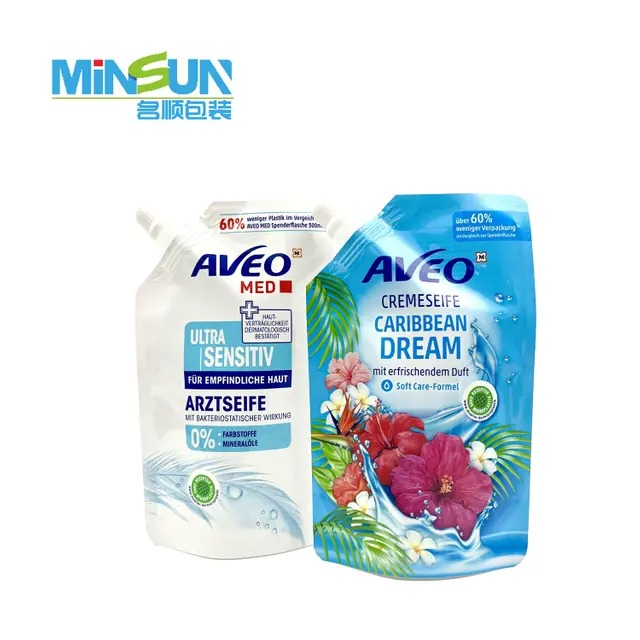
Spouted pouches function effectively because of their carefully engineered structure. Each element serves a specific purpose:
Laminated Film Layers: Protect the contents from oxygen, moisture, and UV exposure.
Spout & Cap: Provide controlled dispensing and resealability.
Gusseted Bottom: Ensures the pouch can stand upright for display and stability.
Customizable Printing Surface: Offers space for branding, nutritional facts, or instructions.
| Component | Function | Benefits |
|---|---|---|
| Laminated Film | Barrier protection | Extends shelf life |
| Spout & Cap | Dispensing and resealing | Convenience, reduced spills |
| Gusseted Bottom | Structural stability | Shelf-ready, improved visibility |
| Printing Area | Branding and compliance information | Marketing advantage |
This integration of features makes spout pouches versatile and highly competitive against traditional rigid packaging formats.
The rapid adoption of spouted pouches is largely due to their numerous advantages for both manufacturers and consumers.
Portability: Lightweight construction makes them easy to carry.
Sustainability: Reduced material use compared to bottles or cans lowers carbon footprint.
Cost Efficiency: Lower shipping and storage costs due to compactness.
Consumer Experience: Easy pouring, resealing, and reduced spillage enhance usability.
Brand Differentiation: Wide printing surface supports creative design and product recognition.
| Benefit Category | Spout Pouches Impact | Traditional Packaging Limitation |
|---|---|---|
| Sustainability | Requires fewer raw materials | Higher plastic/glass usage |
| Usability | Resealable, flexible, easy to dispense | Often single-use |
| Cost | Lower transport/storage costs | Bulky and heavier |
Spouted pouches have become a preferred packaging solution across industries. Their versatility extends beyond beverages to numerous product categories:
Food and Beverages: Baby food, sauces, condiments, energy gels, smoothies.
Personal Care: Shampoo, conditioner, body lotion, liquid soap.
Household Products: Detergents, cleaning agents, fabric softeners.
Pharmaceuticals: Nutritional supplements, medical gels, and syrups.
Their popularity stems from the ability to handle both liquid and viscous substances without compromising product safety or user convenience. This adaptability makes spout pouches a universal solution for brands targeting modern, eco-conscious consumers.
A major reason brands shift toward spouted pouches is the clear contrast with rigid packaging alternatives.
| Feature | Spouted Pouches | Bottles/Cans |
|---|---|---|
| Material Use | Minimal, lightweight films | High plastic, glass, or metal |
| Storage Efficiency | Flat or compact when empty | Occupies full volume |
| Transportation Cost | Lower due to reduced weight | Higher due to bulkiness |
| Branding Options | Full-surface customizable print | Limited to labels |
| Disposal & Recycling | Easier to compress, less landfill | Bulky, more waste |
This comparison highlights how spout pouches align with sustainability goals while also improving logistics and consumer satisfaction.
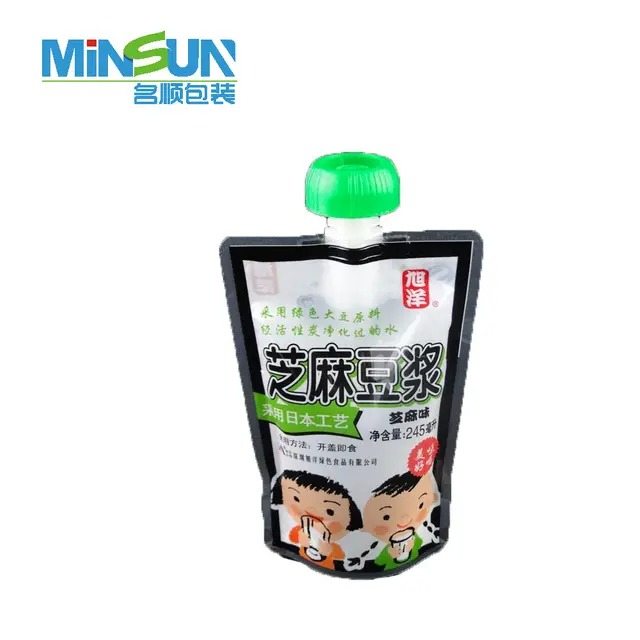
Spouted pouches are highly customizable, enabling brands to tailor them to unique product and marketing requirements.
Shapes & Sizes: From single-serve pouches to large family packs.
Spout Placement: Top-center, corner, or side spouts depending on usage.
Closure Types: Screw caps, flip tops, or child-resistant designs.
Printing Techniques: Digital, rotogravure, or flexographic for vibrant designs.
Materials: Options for recyclable or biodegradable films.
Customization allows businesses to balance functionality with brand storytelling. For instance, baby food brands may choose small, corner-spouted pouches with soft caps for child safety, while beverage companies may opt for larger resealable options.
Sustainability is a driving factor in modern packaging decisions. Spouted pouches use up to 70% less plastic than rigid containers, significantly lowering production and transportation emissions. Many manufacturers are now experimenting with recyclable films and bio-based laminates to further reduce environmental impact. Moreover, because they compress after use, spout pouches occupy less landfill space compared to bottles or cans.
Although recycling infrastructure for flexible packaging is still developing, the reduced raw material usage already positions spouted pouches as a more eco-friendly alternative. For companies aiming to align with sustainability goals, adopting spout pouches is both a strategic and responsible choice.
Despite their benefits, spouted pouches also come with certain challenges:
Recycling Limitations: Multi-layer films may complicate recycling streams.
Consumer Perception: Some buyers still view flexible packaging as less premium compared to glass or rigid containers.
Filling Technology: Manufacturers may need specialized machinery to fill and seal spout pouches efficiently.
Addressing these challenges requires investment in new recycling methods, consumer education, and advanced filling equipment. However, the long-term advantages outweigh the short-term adjustments.
Spouted pouches represent a modern, flexible, and sustainable packaging solution that combines practicality with strong branding opportunities. By integrating resealable spouts with lightweight laminated films, they enhance convenience for consumers and efficiency for businesses. Their adaptability across industries—from food and beverages to personal care and pharmaceuticals—proves their role as a future-focused packaging format. For brands striving to meet sustainability goals while improving consumer experience, spouted pouches are an innovative answer.
1. What products are best suited for spouted pouches?
Spouted pouches are ideal for liquids, semi-liquids, and powders, including juices, sauces, baby food, detergents, and lotions.
2. Are spout pouches environmentally friendly?
Yes, they use significantly less material than rigid packaging and generate lower transportation emissions. Some manufacturers also offer recyclable or compostable options.
3. Can spouted pouches be customized for branding?
Absolutely. Businesses can choose spout placement, pouch shape, cap type, and advanced printing methods for maximum shelf impact.
4. How do spouted pouches compare to bottles?
They are lighter, more cost-efficient, and more space-saving than bottles, while still offering resealability and durability.
5. Do spouted pouches require special filling equipment?
Yes, most spouted pouches are filled using specialized machinery designed to handle flexible packaging formats.


