
- All
- Product Name
- Product Keyword
- Product Model
- Product Summary
- Product Description
- Multi Field Search


Views: 0 Author: Site Editor Publish Time: 2026-09-21 Origin: Site


Guessing your packaging film thickness leads directly to dangerous binary risks. You either overpay for unnecessary material and erode your profit margins, or you under-specify the gauge completely. This under-specification inevitably causes catastrophic seal failures, rapid product spoilage, and expensive brand recalls.
Finding the "best" thickness isn't about picking a universal magic number. It represents a carefully calculated intersection of your specific product weight, critical barrier requirements, and filling machine compatibility. Procurement teams and packaging engineers must evaluate physical structural demands alongside environmental protection needs.
This comprehensive guide provides a proven procurement and engineering framework. We will help you systematically evaluate, specify, and confidently verify the correct film gauge. You can then align these critical measurements perfectly with your unique operational constraints and manufacturing goals.
Film thickness directly dictates machine runnability, shelf-life integrity, and per-unit packaging costs.
Choosing the right gauge requires balancing structural demands (puncture resistance) with barrier needs (oxygen/moisture transmission rates).
Thicker isn't always better; strategic down-gauging can reduce costs without sacrificing performance, provided stringent testing standards are applied.
Always define thickness requirements in standardized units (Mils, Microns, or Gauge) to prevent critical miscommunications with suppliers.
Film thickness acts as the master lever for your packaging economics. It directly impacts your bottom line. We must first examine the relationship between material volume and packaging yield. When assessing flexible films packaging, engineers calculate yield by measuring the number of impressions per roll.
Thicker films naturally reduce the total yardage on a standard roll. This reduction physically limits how many packages you can produce per pound of resin. Your cost per package inevitably increases. Operators must also change rolls more frequently. This causes costly downtime on the production floor.
Machine runnability also depends heavily on precise film thickness. Automated lines demand specific structural behaviors from the material. Thickness actively alters the coefficient of friction (COF). It changes how the film slides over metal forming tubes. Web tension also fluctuates based on material gauge. Thin films stretch easily under tension. They can snap mid-production.
Heat-sealing dwell times require careful calibration alongside film thickness. Sealing jaws apply heat to melt the inner polymer layers. Thicker materials force the heat to travel further. Operators must slow down the machine to increase dwell time. If they run it too fast, the seal fails. If they run a thin film too slowly, the jaws burn straight through the plastic.
Barrier integration presents another crucial factor. Many buyers assume thick films automatically block oxygen and moisture better. This assumption often proves false. Thickness certainly contributes to overall barrier strength. However, material composition matters far more than sheer gauge. A very thin layer of EVOH blocks oxygen significantly better than a thick layer of standard polyethylene.
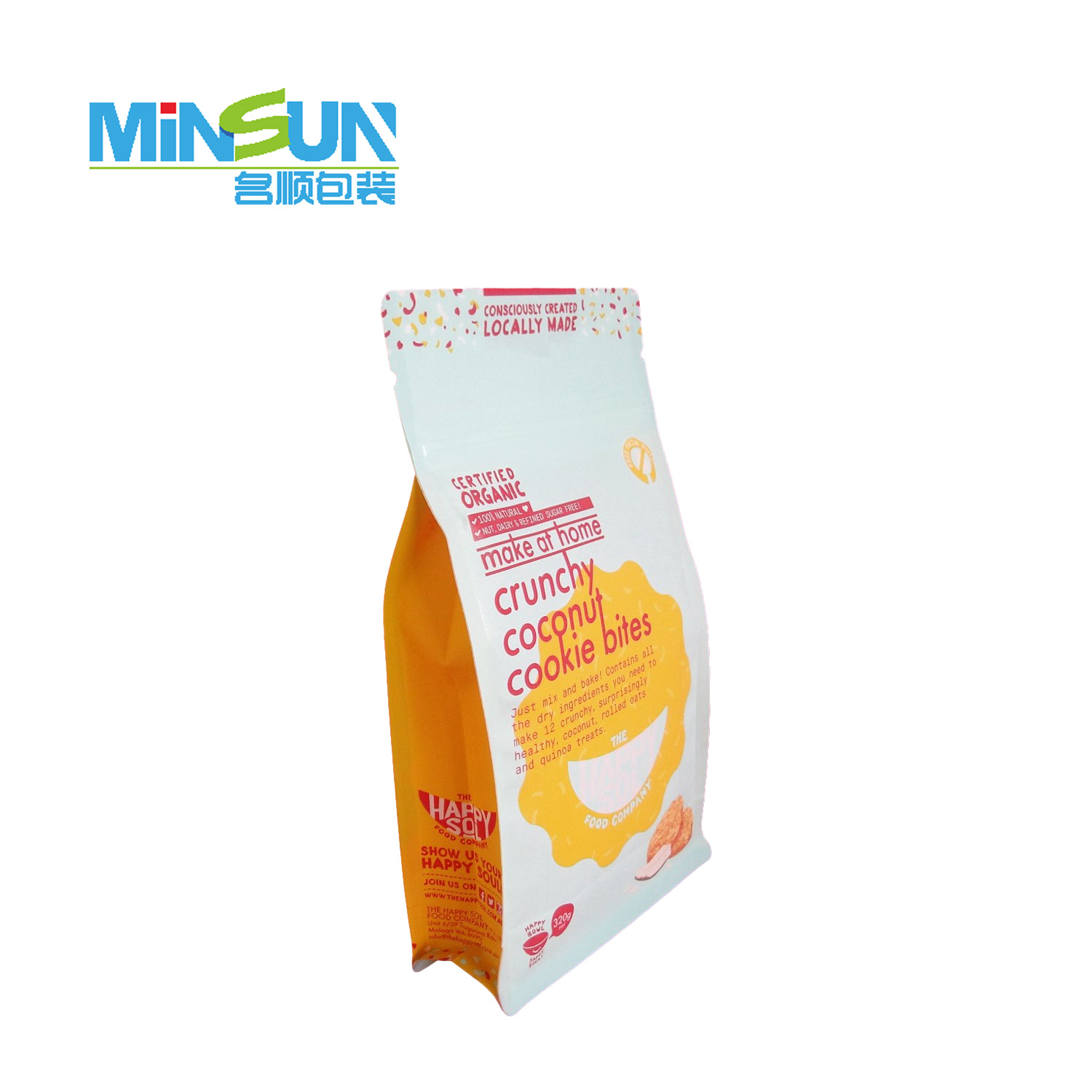
Global suppliers use different terminology for film thickness. This variety often creates severe miscommunications. Procurement teams must master the industry lexicon. Clear communication prevents ordering errors and rejected shipments.
Mil: This unit remains the absolute standard in the US market. One mil equals exactly 0.001 inches. Most domestic suppliers quote structural layers in mils.
Micron (µm): The international packaging sector relies heavily on microns. One mil converts directly to 25.4 microns. Precision barrier coatings often use microns for measurement.
Gauge: Legacy film manufacturers still use gauge frequently. It scales simply. 100 gauge equals 1 mil. Therefore, a 48-gauge PET film equals 0.48 mils.
Buyers must also set realistic expectations regarding manufacturing tolerances. Extrusion equipment cannot produce perfectly uniform plastic every single second. Industry standards recognize this limitation.
Standard manufacturing tolerances allow for a ±5% to ±10% variance in film thickness. A nominal 2.0-mil film might arrive measuring 1.9 mils or 2.1 mils. You must plan for these fluctuations. If your application requires a strict minimum of 2.0 mils, you should specify a slightly higher nominal gauge. This strategy prevents the lower tolerance limit from causing machine failures.
Selecting the optimal thickness requires a systematic approach. You cannot guess. We recommend breaking down your application into three distinct evaluation phases.
Product Weight and Physical State: You must match the material thickness directly to the payload. Dense liquids exert massive hydraulic pressure on the bottom seals. They require heavy-duty gauges. Sharp, rigid edges like pasta or bone-in meats demand extreme puncture resistance. Conversely, lightweight powders function perfectly well in thinner, sift-proof structures.
Distribution Environment: Consider the rigors of your supply chain. Freezer applications alter polymer properties dramatically. Cold temperatures make standard plastics highly brittle. Frozen packaging requires thicker gauges and specialized resins to maintain flex-crack resistance. Ambient retail displays face fewer environmental stresses. They primarily need enough stiffness to stand upright on a shelf.
Lamination Complexity: Overall thickness remains cumulative. Most modern packaging utilizes multi-layer constructions. A three-ply laminate builds structural integrity very differently than a mono-layer extrusion. You might combine a 0.48-mil outer print web, a 0.28-mil foil barrier layer, and a 2.0-mil inner sealant web. The final composite gauge behaves differently than a single thick piece of plastic.
Table 1: General Gauge Recommendations Based on Physical Payload
Product State | Primary Structural Risk | Recommended Gauge (Mils) |
|---|---|---|
Lightweight Powders (e.g., Spices) | Seal leakage, pinholing | 1.5 - 2.5 |
Dry Snacks (e.g., Chips, Crackers) | Moisture ingress, crushing | 2.0 - 3.0 |
Heavy Liquids (e.g., Detergents) | Bottom seal rupture, hydraulic pressure | 3.5 - 5.0+ |
Bone-in Meats / Rigid Edges | Sharp punctures during vacuum sealing | 4.0 - 6.0+ |
Different machinery types and pouch formats demand specialized thickness ranges. You must tailor your gauge to the final structural format.
Vertical and Horizontal Form-Fill-Seal machines run at extreme speeds. For these applications, engineers frequently specify printed roll film. Target thicknesses typically range from 1.5 to 3.0 mils.
The evaluation focus here relies heavily on machinability. High-speed automated snacking or bakery lines require rapid heat transfer. Thinner films seal faster. However, the film must maintain enough tensile strength to survive the pulling belts. You must balance fast sealing properties against the risk of web snapping.
Stand-up designs require significant structural rigidity. You cannot use flimsy materials here. When engineering a high barrier food pouch, target thicknesses typically fall between 3.0 and 5.0+ mils.
The evaluation focus shifts toward gusset stability. The bottom gusset must support the entire weight of the product. Heavy-duty puncture resistance becomes critical for dense perishables or bulk liquids. If the gauge drops too low, the pouch slumps over on the retail shelf. It loses its premium aesthetic.
Foil laminations provide the ultimate protection. In aluminum foil food packaging, the actual foil layer measures incredibly thin. It often sits between 0.25 and 0.35 mils. However, the overall laminate gauge usually reaches 3.0 to 4.5 mils.
The evaluation focus centers entirely on protecting that fragile foil core. Aluminum foil blocks light and oxygen perfectly, but it cracks easily when flexed. The protective outer webs (like PET) and inner sealant layers (like LLDPE) provide the necessary physical armor. The cumulative thickness absorbs transport shocks so the foil remains intact.
Many brands fall into the expensive trap of over-packaging. They buy excessively thick films for false security. This strategy creates massive hidden costs. You pay for unnecessary freight weight on every single truckload. Your sealing machines require slower speeds and higher temperatures. This wastes energy and reduces output capacity. Furthermore, thicker plastics drastically increase your corporate carbon footprint.
The reality of down-gauging offers a lucrative alternative. Modern polymer science advances rapidly. Chemical companies now produce metallocene polyethylenes. These advanced resins allow for much thinner films with surprisingly high tensile strength. You can often drop a 3-mil specification down to 2.5 mils. This swap saves thousands of dollars annually while maintaining physical performance.
However, down-gauging carries severe implementation risks. You cannot simply switch out the roll and hit start. Down-gauging requires strict requalification on your filling lines. Thinner films react differently to heat and tension. You risk severe wrinkling in the sealing jaws. Burn-throughs happen rapidly if operators do not adjust temperatures. Web snapping occurs if tension rollers remain too tight. You must conduct thorough testing before committing to lighter materials.
Trusting your supplier is important, but verification is mandatory. Substandard film thickness ruins production schedules. You must establish rigorous quality control procedures upon material delivery.
We recommend relying strictly on standardized testing frameworks. Reference reliable testing methodologies like ASTM D6988. This specific standard governs the measurement thickness of plastic films. Buyers should aggressively look for these ASTM or ISO designations on the technical data sheets (TDS) provided by suppliers. A missing standard often indicates questionable manufacturing controls.
Your measurement tools also dictate your accuracy. Standard calipers fail miserably when measuring flexible films. Operators tend to squeeze calipers too tightly. This compresses the soft polymer and generates falsely thin readings. You must invest in dead-weight micrometers. These specialized devices drop a weighted presser foot onto the film. They apply perfectly consistent pressure every time. This eliminates human error.
Supplier shortlisting logic must include real-world verification. Never sign a massive contract based solely on a data sheet. We highly recommend requesting pre-production roll samples. Run localized machine trials on your actual equipment. Observe the COF, check the seal integrity, and measure the final yield. Only commit to full-scale production after the film passes these physical trials.
The optimal film thickness will always represent an engineered compromise. You must carefully balance your procurement budget, maximum machine speeds, and mandatory product protection levels. No single gauge solves every packaging challenge perfectly.
Procurement and engineering teams should immediately audit their current yield rates. Next, request a detailed gauge tolerance report from your primary supplier to identify any hidden material variances. Finally, always conduct a physical prototype run for any new structural format before scaling up production. These proactive steps guarantee maximum performance and optimal margins.
A: The minimum requirement typically starts at 3.0 mils for standard applications like smooth cheeses or processed meats. However, applications involving bone-in meats or sharp edges demand up to 5.0+ mils. This heavier gauge prevents aggressive micro-punctures when the vacuum pulls the film tightly against rigid product corners.
A: Yes, but minimally. Applied ink and protective over-lacquers add only fractional microns to the surface. Reverse-printed laminations encapsulate the ink entirely between two layers of plastic. This internal placement protects the graphics without significantly altering the final structural gauge or affecting machine runnability.
A: You evaluate the formula for calculating yield, which measures square inches per pound of resin. Decreasing your film thickness physically increases the available yield per pound. This provides more yardage per roll. Higher yield directly lowers your material cost per individual impression, driving better packaging ROI.


