
- All
- Product Name
- Product Keyword
- Product Model
- Product Summary
- Product Description
- Multi Field Search


Views: 0 Author: Site Editor Publish Time: 2026-02-08 Origin: Site


Why is it called kraft paper, not something else?
You see it everywhere, yet the name often raises questions.In this article, you will learn what “kraft” really means and how it relates to modern packaging, including kraft paper bags with window.
The word “kraft” comes from German and means “strength.” It was adopted to describe a paper defined by physical performance, not visual style. When the term was first used in an industrial context, it referred to paper produced through a process that preserved strong wood fibers. The name therefore communicated a functional property that could be tested and observed during use.
This meaning made the term practical across different industries. It allowed manufacturers and users to associate the material with durability during handling, filling, and transport. That association still applies today. In modern packaging contexts, including kraft paper bags with window, the word continues to signal that strength is the material’s defining characteristic rather than its appearance.
Unlike many material names, “kraft” does not describe color, texture, or finish. It points to the internal structure of the paper. The key factor is the presence of long cellulose fibers that remain largely intact during processing. These fibers give the paper higher resistance to tearing and tension, even when the surface treatment changes.
This distinction helps explain common misunderstandings. Visual cues alone are not reliable indicators of kraft paper. For clarity, the name “kraft” consistently refers to properties such as:
● Higher tensile strength compared to standard paper
● Improved tear resistance under load
● Stable performance across different surface treatments
Because the name is tied to structure rather than design, it applies equally to plain sheets, coated formats, and kraft paper bags with window. The visible features may vary, but the material logic behind the term remains the same.
The term “kraft” was retained because it described a specific process outcome with technical accuracy. Translating it into local languages would have introduced ambiguity, especially in manufacturing and trade. A single shared term made it easier for suppliers, converters, and buyers in different regions to refer to the same material without reinterpretation.
As the material gained wider adoption, “kraft” became embedded in technical standards and documentation. Over time, it shifted from a foreign word to a recognized industry label. Its continued international use reflects the need for consistent terminology, which supports clear evaluation of materials such as kraft paper bags with window across different markets and applications.
The kraft pulping method emerged as a response to the limitations of earlier papermaking techniques. Traditional processes often weakened wood fibers during chemical treatment, which resulted in paper that tore easily under stress. The kraft process took a different approach by prioritizing fiber preservation. This change allowed paper to perform better in demanding uses, including packaging formats such as kraft paper bags with window.
What set this method apart was how it treated raw wood material. Instead of breaking fibers down aggressively, the process removed unwanted components while keeping fiber length and integrity. This shift directly influenced paper behavior during use:
● Longer fibers improved resistance to tearing
● Stronger fiber bonding increased tensile strength
● More consistent structure supported heavier loads
Because these performance gains were measurable, the process itself became closely associated with the resulting material.
In industrial contexts, production methods often define material identity. When a process consistently produces a distinct result, its name can replace descriptive labels. This happens because the process explains both how the material is made and how it behaves. Over time, users begin to associate the process name with a reliable set of properties.
Kraft paper follows this pattern. The term moved from technical documentation into everyday use because it simplified communication. Instead of listing strength characteristics each time, people could refer to the process name. This is common in manufacturing, where shared terminology reduces confusion across regions and applications. As a result, “kraft” became a material name that signals origin, structure, and expected performance in a single word.
Kraft paper is defined by the structure of its fibers rather than surface features. The material contains long cellulose fibers that remain largely intact during production. These fibers form strong bonds with each other, which increases resistance to pulling and tearing. This internal structure explains why kraft paper performs reliably under stress in many packaging uses, including kraft paper bags with window.
In practical terms, fiber length and bonding affect how the paper behaves during handling. When the material is folded, filled, or transported, the fibers distribute stress more evenly. This reduces the risk of sudden tearing and helps the paper maintain its shape. These characteristics become especially important in packaging conditions where repeated opening, weight, or movement is involved.
Kraft paper often has a plain or natural look, which can lead to incorrect assumptions about its performance. Color and texture are visual outcomes of processing choices, not direct indicators of strength. A brown surface or slightly rough feel does not define the material’s capabilities. The engineered strength comes from the internal fiber network, which remains consistent across different finishes.
This visual simplicity can obscure how the material functions. To avoid confusion, it helps to separate appearance from structure:
● Color does not determine fiber strength
● Surface texture does not predict tear resistance
● Visual uniformity does not reflect load-bearing capacity
These misconceptions explain why kraft paper is sometimes underestimated. Despite its simple appearance, the material is engineered to perform consistently in demanding applications, including formats such as kraft paper bags with window, where strength must support both structure and visibility.
Kraft paper is commonly used in packaging because it performs reliably during transport and handling. Its fiber structure allows it to resist tearing when folded, filled, or compressed. When packages are stacked or moved, the material distributes stress across the surface instead of concentrating it at weak points. This behavior helps maintain package integrity through storage and delivery.
Another factor is its balance between strength and flexibility. Kraft paper bends without cracking and adapts to different package shapes. This reduces failure during packing, sealing, and opening. These functional needs explain why the term “kraft,” meaning strength, remains accurate. The name reflects how the material behaves in real use rather than how it appears.
Key functional requirements that drive adoption include:
● Resistance to tearing during handling and transport
● Flexibility that supports folding and reshaping
● Stable performance under varying load conditions
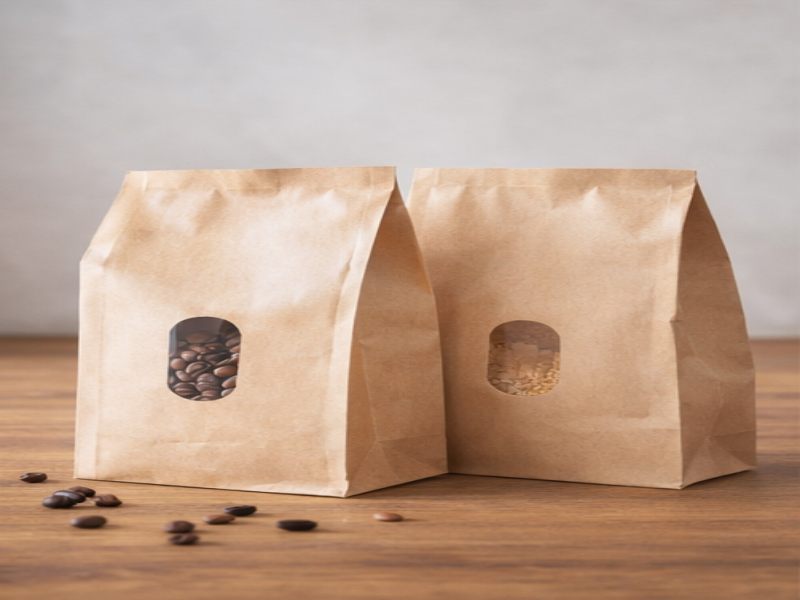
Kraft paper bags with window show how visibility can be added without changing the material’s core function. The transparent window allows users to see the contents, while the kraft paper body continues to provide structural support. The window is integrated as a secondary feature and does not replace the paper’s load-bearing role.
In food packaging, visibility and stability often need to coexist. The table below shows how each element serves a distinct function without overlap:
Packaging element | Primary role | Impact on material behavior |
Kraft paper body | Structural support | Maintains strength and shape during handling |
Transparent window | Content visibility | Enables inspection without affecting durability |
This separation of roles helps prevent confusion about material performance. The window improves clarity for users, while the kraft paper ensures the package remains stable throughout distribution and use.
The terms “kraft paper” and “craft paper” are often confused because they sound similar in English. This confusion is linguistic rather than technical. “Kraft” comes from German and refers to strength, while “craft” relates to handmade or creative activities. Despite the similar pronunciation, the two terms describe papers with different purposes and properties.
This misunderstanding becomes more common when paper is selected without checking material definitions. Craft paper is a broad label used for creative or decorative work. Kraft paper is a material defined by how it is produced and how it performs. Confusing the two can lead to incorrect expectations, especially when paper is intended for packaging rather than creative use.
The functional differences matter in practical selection:
● Kraft paper is chosen for durability and load resistance
● Craft paper is chosen for flexibility, color, or ease of cutting
● Packaging requires predictable strength, while creative use does not
When the terms are mixed, users may expect strength from craft paper or decorative qualities from kraft paper. Clear terminology helps avoid these mismatches.
Material names often shape expectations before any physical evaluation occurs. The word “kraft” immediately suggests strength and resilience. For many readers, it also carries an association with natural materials because of its common unbleached appearance. These impressions form quickly, even before the paper is touched or tested.
However, names guide understanding rather than guarantee performance. “Kraft” signals a general material logic, not a fixed specification. It helps narrow expectations during early evaluation. This is useful in decision-making, where names act as reference points that reduce uncertainty at the initial stage.
Kraft paper bags with window combine two cues that influence interpretation. The transparent window allows visual inspection of contents. The kraft paper body suggests structural reliability. Together, they help users assess suitability without opening the package.
These inferences are practical rather than promotional. Transparency supports inspection, while material naming clarifies expected behavior. When buyers evaluate packaging options, the name and visible features work together to set reasonable expectations. This clarity helps reduce misinterpretation and supports more accurate material selection in real packaging contexts.
Kraft paper is named for strength, not appearance.
The term reflects fiber structure and manufacturing logic.Understanding the name helps readers judge material behavior.
This includes formats like kraft paper bags with window.Guangdong Min Sun Evironmental Protection Packaging Technology Co.,Ltd. applies this material understanding to practical packaging, offering solutions that focus on durability, clarity, and reliable everyday use.
A: Kraft paper bags with window combine material strength with visibility, supporting product inspection while maintaining structural reliability during storage and handling.
A: Kraft paper bags with window perform well in dry goods packaging where controlled loads, stacking, and frequent handling are required.
A: Kraft paper bags with window signal fiber-based strength, helping teams assess durability expectations before specifying materials.


