
- All
- Product Name
- Product Keyword
- Product Model
- Product Summary
- Product Description
- Multi Field Search


Views: 0 Author: Site Editor Publish Time: 2026-07-01 Origin: Site


The transition from plastic to paper in food retail is no longer just a sustainability initiative. It is a strict regulatory requirement and a core consumer expectation. You face a clear mandate today. Shoppers demand eco-friendly options, and municipalities actively enforce plastic bans. However, selecting the correct paper packaging involves navigating complex trade-offs. You must balance material performance, food safety compliance, and unit economics. A hasty switch often leads to soggy bags, broken handles, and frustrated customers.
How do you choose the right materials? This guide provides a structured framework for evaluating and implementing high-quality Paper Packaging Bags. You will learn to protect product integrity without compromising operational margins. We explore basis weights, barrier coatings, and supply chain realities in detail. By understanding these variables, you can confidently navigate the procurement process and secure reliable packaging for your retail operations.
Performance vs. Sustainability: True food-grade paper packaging must balance barrier properties (grease/moisture resistance) with end-of-life recyclability.
Application-Specific Selection: There is no one-size-fits-all; bakery items, hot takeout, and bulk groceries require distinct basis weights (GSM) and material treatments.
Risk Mitigation: Improper storage and unverified supplier claims (e.g., non-compliant coatings) are the highest risks in paper packaging adoption.
Branding ROI: Using custom-printed, water-based inks on recyclable promotional paper bags transforms a sunk operational cost into a measurable marketing asset.
Food retailers must adopt paper alternatives without suffering performance degradation. Early adopters of paper solutions often faced severe functional issues. Grease bleed-through ruins the customer experience. Heat loss affects food quality during transit. Tearing causes catastrophic spills and food waste. Additionally, prohibitive cost increases can quickly erode tight restaurant margins. You need a solution solving these problems simultaneously.
Several drivers push this market evolution. You must navigate local single-use plastic bans constantly. Regulations evolve rapidly across cities and countries. Meanwhile, environmentally conscious consumers impose their own ESG (Environmental, Social, and Governance) expectations. They scrutinize how you package their meals. If they see unrecyclable plastic, they may choose a competitor.
A successful rollout requires establishing clear operational benchmarks. Before buying Food Packaging Bags, you should define what success looks like for your specific menu. These criteria typically include:
Food Freshness: The material must allow adequate airflow to keep crispy items crunchy.
Structural Integrity: The bag must pass rigorous structural stress tests during transit.
Safety Compliance: All materials must align with direct food contact safety standards, such as FDA or EFSA regulations.
Temperature Control: The packaging should retain sufficient heat for hot deliveries without generating excessive internal condensation.
Retailers often make the mistake of buying one standard bag for all items. Different food categories demand specific material properties. Understanding these distinctions prevents packaging failures and optimizes your spend.
Dry & Ambient Foods (Bakeries, Cafes, Artisanal Groceries)
Standard unbleached food-grade Kraft paper is your best option here. Pastries, bread, and dry goods do not require heavy grease barriers. High breathability prevents moisture buildup. If moisture traps inside the bag, it creates soggy pastries. Standard Kraft provides an organic, rustic brand aesthetic. It communicates freshness and artisanal quality to your customers.
Quick Service & Takeout (Hot, Greasy, or Wet Foods)
Burgers, fries, and fried chicken demand grease-resistant or lightly coated paper bags. Standard paper fails instantly when exposed to hot oil. Manufacturers use specific mechanical treatments for this. Calendering presses the paper fibers tightly together to slow grease penetration. Alternatively, suppliers apply eco-friendly barrier coatings. These prevent structural failure from oil and condensation.
Heavy-Duty Grocery & Delivery
Bulk grocery orders and multi-item deliveries require maximum strength. Multi-ply SOS (Self-Opening Sack) bags serve this purpose perfectly. They feature block bottoms for easy loading. They often include reinforced handles, either twisted or flat. This application requires higher GSM (grams per square meter). High tear-resistance handles varied product weights and temperature zones in a single order.
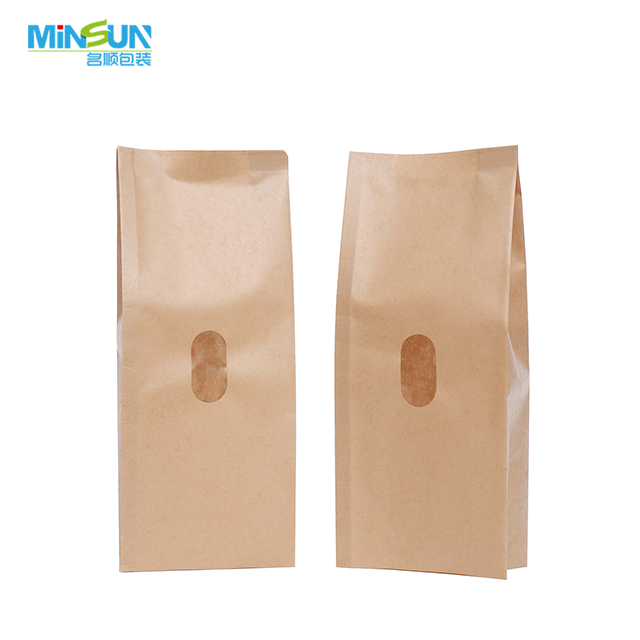
Evaluating packaging materials requires moving beyond simple aesthetics. You must analyze the technical specifications. Procurement teams should focus on weight, barrier technologies, and safety certifications to ensure reliable performance.
First, consider material weight and structural integrity. The industry measures paper thickness in GSM. You must match the GSM to specific load-bearing requirements. A lightweight 50 GSM bag works well for a single croissant. However, a heavy delivery order requires 100 to 120 GSM paper. Selecting a GSM that is too low causes tears. Selecting one that is too high wastes money.
Next, evaluate barrier properties versus recyclability. This is a critical trade-off. Traditional PE (Polyethylene) or PLA (Polylactic Acid) linings offer excellent leak protection. However, they make the paper much harder to recycle. Many municipal facilities reject them. Newer water-based dispersion coatings offer a better solution. They remain highly recyclable while providing varying levels of grease resistance.
Finally, you must verify compliance and safety standards. Paper touching food directly requires strict oversight. Verify all certifications for direct food contact. Request documentation proving heavy metal limits in printing inks. Furthermore, ensure responsible sourcing. Look for FSC (Forest Stewardship Council) or PEFC certifications to validate environmental claims.
Barrier Technology | Grease Resistance Level | Recyclability Rating | Ideal Food Retail Application |
|---|---|---|---|
Standard Uncoated Kraft | Low | Excellent (100% Curbside) | Dry baked goods, dry produce, whole fruits |
Mechanical Calendering | Medium | Excellent (100% Curbside) | Short-duration fast food, light sandwiches |
Water-Based Dispersion | High | Very Good (Widely Accepted) | Fried foods, heavy takeout, dressed salads |
PE / Plastic Lamination | Very High | Poor (Requires Special Facilities) | Liquid-heavy items, frozen goods (Not recommended for ESG goals) |
Many businesses view packaging purely as a logistical expense. This mindset misses a massive opportunity. Transitioning packaging into a customer acquisition tool changes the financial equation. High-visibility branding turns a simple carrier into a walking billboard. You can drive true marketing economics with Recyclable Promotional Paper Bags.
Printability considerations play a major role in brand perception. You must evaluate Kraft versus bleached white paper for color fidelity. Unbleached brown Kraft absorbs ink differently. Colors often appear muted or earthy. This suits organic or rustic brands perfectly. If your logo features vibrant, precise brand colors, bleached white paper is superior. It provides a clean canvas for sharp, high-contrast printing.
Sustainable execution remains vital during the printing process. Standard petroleum-based inks contain volatile organic compounds (VOCs). These harm the environment and disrupt recycling processes. Ensure your manufacturer utilizes soy-based or water-based inks. This guarantees the promotional aspect does not negate your recyclable claims. Customers notice when a brand commits fully to sustainability. It builds long-term loyalty and enhances your market positioning.
Even the best packaging fails if poorly managed before it reaches the customer. Implementation realities often catch procurement teams off guard. You must proactively manage storage conditions, consistency, and volume requirements.
Storage and handling vulnerabilities represent a significant risk. Paper is highly hygroscopic. It naturally absorbs moisture from the surrounding air. High warehouse humidity can degrade water-based adhesives rapidly. It also weakens the structural integrity of the paper itself. A bag might look perfect upon delivery but fail weeks later on the retail floor. You must control your storage environment.
Supply chain consistency is another major hurdle. Relying on unverified manufacturers introduces risk. You might experience batch-to-batch variations in paper thickness. Sometimes, the coating efficacy drops without warning. A bad batch of grease-resistant bags can ruin hundreds of customer orders in a single day. Establish strict quality control agreements with your vendor.
You must also balance unit economics and MOQs (Minimum Order Quantities). High-volume international orders offer a much lower per-unit price. However, they tie up capital and require massive storage space. Domestic suppliers offer agility and lower MOQs. They allow you to pivot quickly if menu items change. Evaluate your cash flow and storage capacity before committing to massive overseas shipments.
Moving from evaluation to procurement requires a systematic approach. You should not rely on visual inspections alone. Implementing a strict shortlisting logic prevents costly mistakes down the line.
Start with a rigorous sample testing protocol. Do not evaluate empty bags. Empty bags always look perfect. Mandate real-world stress tests. Place a hot, greasy menu item in the sample bag. Leave it for 30 minutes. Check for oil bleed-through on the bottom. Lift the bag aggressively by the handles to test heat retention and adhesive strength. This mimics the actual journey from your kitchen to the customer's home.
Next, use a comprehensive supplier vetting checklist. Protect your business by verifying every claim.
Material Data Sheets: Request exact material data sheets (MDS). Do not accept vague descriptions.
Third-Party Verification: Verify independent third-party testing for food safety compliance. Look for recent laboratory reports.
Contingency Planning: Assess lead times carefully. Ask the supplier about their contingency plans for raw material shortages.
The most actionable next step is initiating a pilot test. Do not execute a chain-wide rollout immediately. Select a single, high-traffic retail location. Introduce the new packaging for two weeks. Gather feedback from frontline staff and customers. Staff will tell you if the bags are hard to open. Customers will complain if the bags tear. Use this data to refine your specifications before full implementation.
Selecting the right packaging requires moving far beyond basic aesthetics. You must rigorously evaluate GSM, barrier technologies, and food-safe certifications. Ignoring these technical details leads to operational failures and unhappy customers. Paper packaging must perform flawlessly while meeting strict environmental standards.
The most successful food retailers view packaging procurement strategically. It is not just a commodity purchase. It represents a strategic alignment of operational reliability, regulatory compliance, and brand integrity. When executed correctly, high-quality Paper Packaging Bags protect your food and elevate your brand presence in the market.
Prioritize Application Fit: Match the bag's GSM and coating to the specific moisture and grease levels of your food.
Demand Transparency: Always collect Material Data Sheets and third-party safety certifications before signing a contract.
Test Rigorously: Run 30-minute real-world stress tests with your actual menu items before purchasing in bulk.
Control Storage: Keep paper products in climate-controlled environments to prevent humidity degradation.
Do not leave your customer experience to chance. Contact a packaging specialist today to request material data sheets and arrange a performance sample test tailored specifically for your menu items.
A: No. Direct food contact requires specific manufacturing conditions and the absence of toxic chemicals in the pulp and adhesives. Industrial-grade Kraft paper often contains impurities. Always verify FDA or EFSA compliance to ensure the material is strictly food-grade.
A: Traditional plastic or wax linings often render bags non-recyclable because facilities cannot separate the materials. Modern alternatives using water-based dispersion coatings or mechanical paper densification offer excellent grease resistance while maintaining full curbside recyclability.
A: While it varies by load, standard takeout bags for light items typically range from 60 to 80 GSM. However, heavy-duty grocery or multi-item restaurant delivery bags generally require 100 to 120 GSM to ensure adequate tear resistance during transit.
A: Store paper bags in a climate-controlled environment. Keep them off the ground on pallets. Leave them shrink-wrapped until needed to protect against high warehouse humidity, which can easily compromise the paper's structural integrity and weaken adhesive bonds.


