
- All
- Product Name
- Product Keyword
- Product Model
- Product Summary
- Product Description
- Multi Field Search
Views: 0 Author: Site Editor Publish Time: 2026-05-18 Origin: Site


In highly saturated retail and e-commerce markets, brands face a relentless battle for consumer attention. Standing out on a crowded shelf requires much more than just bright graphics. Traditional packaging often fails to deliver reliable structural integrity. Standard flexible pouches frequently tip over during transit or look disorganized on retail displays. Meanwhile, rigid containers or multi-component "bag-in-box" setups bloat production budgets and generate excessive packaging waste.
You need a structural solution bridging this gap effectively. The eight-sided seal bag solves these critical issues. It successfully combines the physical stability of a rigid carton and the material efficiency of flexible film. This comprehensive guide breaks down the structural mechanics, operational efficiencies, material configurations, and sourcing criteria. You will learn how transitioning to premium flat bottom packaging protects products, elevates brand perception, and streamlines automated filling lines for scalable growth.
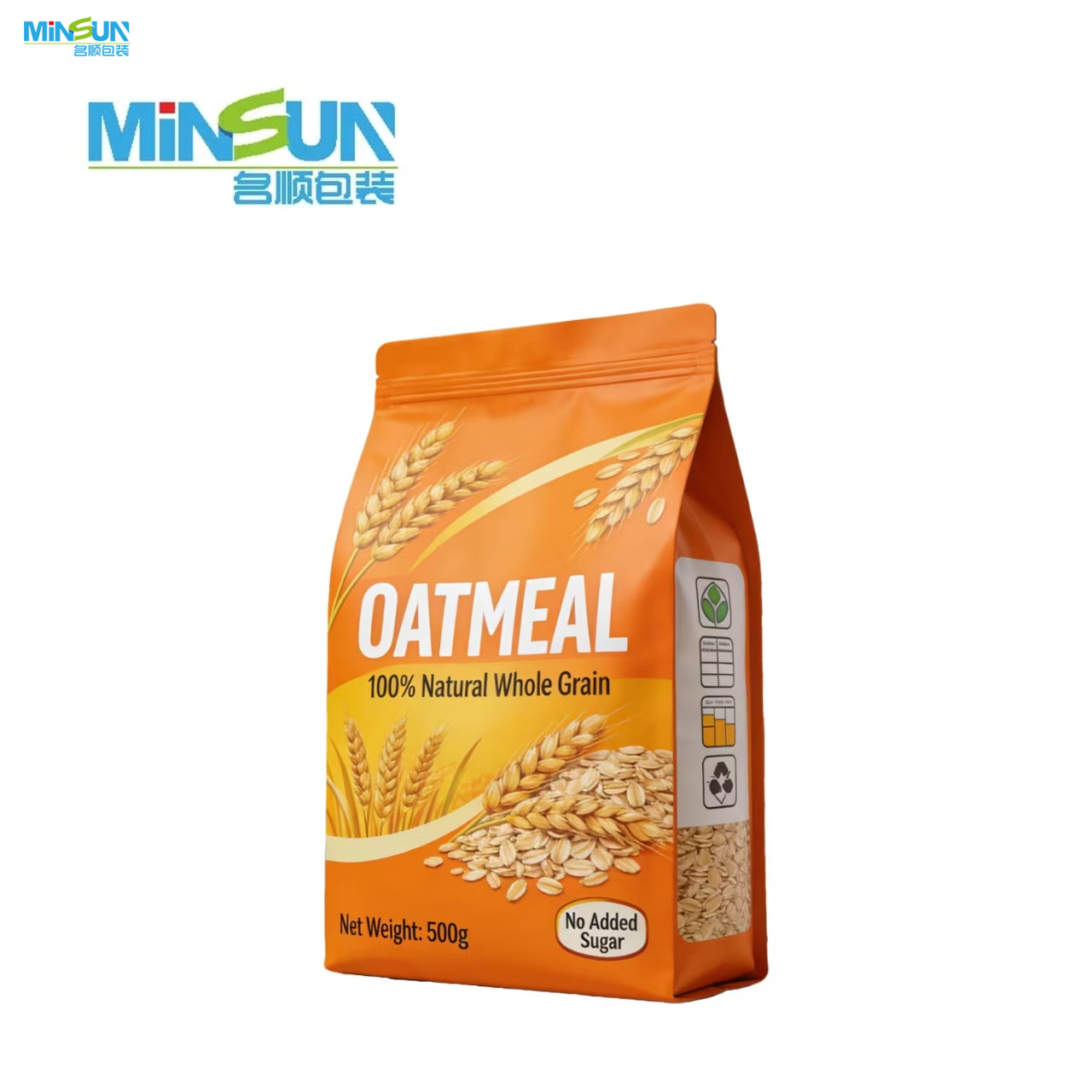
Structural Superiority: Flat bottom designs create a "boxy without a box" structure, providing a low center of gravity that resists tipping on shelves and during e-commerce transit.
Marketing & Compliance: Eight distinct sealed panels provide maximized, continuous printing space, easily accommodating both brand narratives and multi-language compliance requirements for global sales.
Operational ROI: Wide-open top designs accelerate automated filling speeds, while the precise, square shape optimizes cube utilization for palletizing and shipping.
BOM Reduction: Effectively replaces double-packaging (rigid carton + inner liner), lowering overall packaging costs and supporting sustainability metrics.
Defining the core structure begins with its geometry. We engineer this flexible pouch using a fully flat base. Side gussets join the front and back panels via eight individual edge seals. Four seals run vertically along the sides, while four run horizontally along the bottom. This intricate construction forms a rigid, box-like shape. Unlike conventional stand-up pouches relying on a single folded bottom gusset, this design maintains its sharp, architectural silhouette even when empty.
Upgrading to a premium packaging bag fundamentally alters consumer brand perception. When shoppers browse retail aisles, they subconsciously link structural rigidity with high-quality contents. Moving away from flimsy, standard pouches to this structured format signals a high-value product. It tells consumers you invest heavily in quality control, making it ideal for artisanal coffee, gourmet snacks, and high-end pet foods.
Brands also gain immense value from the "bag-in-box" alternative. Traditional cereal or specialty baking mixes use a cardboard outer box containing a sealed foil inner bag. This double-layer approach wastes materials and increases labor. You can eliminate the cardboard entirely by deploying a single, high-barrier box pouch. It lowers your overall bill of materials. It simplifies inventory management. It also supports corporate sustainability targets by drastically reducing packaging weight.
Furthermore, global layout flexibility offers a massive marketing advantage. You gain access to four main panels and four bottom or side panels. You can easily separate high-impact visual branding from regulatory data. Place your compelling brand narrative on the front. Dedicate the side gussets to nutritional facts, certification logos, and multi-language text. This spatial distribution ensures legal compliance across international markets without cluttering your core design.
The physics of stability sets this packaging format apart. When you fill standard Doypack designs, they often suffer from "ballooning." The center expands outward, pulling the bottom up, creating a wobbly base. The flat bottom and precise side gussets prevent this entirely. They distribute product weight evenly down into the four rigid corners. A flat bottom pouch anchors itself like a solid column on a slab, resisting tipping risks during shelf stocking and turbulent e-commerce transit.
Production line wins represent another critical benefit. Manufacturers frequently struggle with standard flexible pouches because their narrow openings restrict filling nozzles. Conversely, a fully open top provides a massive target for product hoppers. The inherent stiffness of a quad seal bag structure maintains a rigid, wide opening on automated filling lines. Gripper jaws hold the defined edges securely. This prevents messy product spillage, reduces mechanical jams, and ultimately increases your units-per-minute (UPM) output.
Logistics teams also praise the resulting cube utilization. Round or organically shaped bags create massive dead space inside secondary shipping cartons. The square footprint minimizes this void space. Reducing air in your packaging yields tangible financial returns across the entire supply chain.
Here are the three primary impacts on logistics:
Pallet Load Density: Square shapes stack flush against each other. You fit more individual units per shipping carton, maximizing the payload of every wooden pallet.
Warehousing Costs: High-density packing means fewer pallets occupy your warehouse racks. You reduce your overall storage footprint per thousands of units.
Shipping Efficiency: Tighter packing improves the dimensional weight ratio. You stop paying freight carriers to transport empty air, directly lowering distribution expenses.

Developing successful flexible packaging demands precise material science. We create multi-composite film structures by laminating various polymer and metallic layers together. You must map these layers to specific product requirements, focusing heavily on oxygen, UV, and moisture barriers. For instance, combining Kraft paper with VMPET (vacuum metallized PET) and a PE (polyethylene) sealing layer offers an organic aesthetic alongside formidable oxygen resistance.
Table 1: Common Multi-Composite Film Structures and Barrier Properties | ||
Material Structure | Primary Barrier Strength | Ideal Product Application |
|---|---|---|
PET / LLDPE | Basic moisture barrier, high clarity. | Dry pasta, candies, non-perishables. |
PET / VMPET / PE | Strong oxygen and light barrier. | Granola, baked goods, protein powders. |
PET / AL / PE | Maximum oxygen, UV, and moisture block. | Specialty coffee, premium teas, sensitive electronics. |
Kraft Paper / AL / PE | High barrier with rustic, organic texture. | Artisanal foods, organic supplements. |
Weight and stress tolerances dictate the physical thickness of these laminations. You must adapt film thickness for varying payload demands. Packaging a 50g specialty tea requires vastly different structural integrity than a heavy-duty 20kg pet food application. For bulk items, reinforced laminated structures ensure the eight side seal remains intact under rigorous drop-test conditions. If sharp kibble impacts the internal walls during a fall, the film must stretch slightly without puncturing or splitting the seam.
Integrating functional add-ons drastically improves consumer experience. You can incorporate specialized hardware to elevate a flat bottom bag beyond simple containment.
Degassing Valves: Essential for freshly roasted coffee beans. They release built-up CO2 pressure from inside without allowing stale oxygen ingress.
Resealable Zippers: Overcoming the traditional limitations of standard gusseted bags requires advanced engineering. We integrate front-pull pocket zippers or top-slider zippers to ensure extended product shelf life after opening.
Transparent Windows: Consumers want to see the product. We balance high-barrier foil protection by integrating localized clear polymer paneling, providing visual trust without compromising overall freshness.
Sourcing exceptional packaging requires precise volume-to-dimension calculations. You must analyze sizing and gusset-to-bottom ratios accurately. The bag needs to look pleasantly full on the shelf. If you miscalculate the volume, excess product strains the side seals and bulges the flat bottom outward, destroying stability. Conversely, specifying a bag too large makes your premium product look underfilled, causing consumers to feel cheated.
Print and finish specifications define the final aesthetic. Brands choose between matte, gloss, spot UV, or metallic foil stamping. However, you must understand how the eight individual seams impact artwork bleed. Because the material folds and seals sharply at the edges, continuous patterns require meticulous alignment. Misaligned artwork across a prominent edge seal immediately degrades the premium perception.
Evaluating supplier capabilities ensures consistent quality. You must demand necessary certifications like FDA compliance for food safety and ISO standards for manufacturing consistency. Assess their Minimum Order Quantities (MOQ). A good partner scales with you, offering manageable runs of 500 units for pilot launches while handling full-scale production runs seamlessly. Finally, audit their quality control protocols. They should demonstrate rigorous burst testing and seal integrity checks before shipping any batch.
Chart 1: Print Finish Evaluation Matrix | |||
Finish Option | Visual Impact | Tactile Feel | Best Suited For |
|---|---|---|---|
High Gloss | Vibrant colors, high reflectivity. | Smooth, slick. | Confectionery, bright modern brands. |
Soft-Touch Matte | Subdued colors, no glare. | Velvety, premium grip. | Organic foods, luxury cosmetics. |
Spot UV | Contrasting gloss over matte background. | Textured, raised highlights. | Brands highlighting specific logos or text. |
Foil Stamping | Metallic sheen (gold, silver, copper). | Slightly debossed texture. | Gourmet coffee, limited edition items. |
Transitioning to structural pouches carries specific engineering risks. The "dead fold" problem ruins many product launches. If you select a laminated film that is too thick or rigid, opening and handling the bag creates permanent, ugly creases. The metallic layers crack aesthetically. Conversely, selecting a film that is too soft causes the bag to collapse into a wrinkled mess as the consumer consumes the product. You avoid this by requesting material samples and simulating real-world handling.
Overfilling and underfilling distortion destroys the geometry. Inaccurate volume estimations lead to "pillowing." This occurs when the internal pressure rounds out the flat base, turning your stable box pouch into an unstable cylinder. Accurate bulk density testing prior to finalizing bag dimensions eliminates this risk. You must calculate the exact volume your specific product occupies, not just its weight.
Seal contamination poses a massive risk to shelf life. When packaging fine particulate goods like baking flour, matcha tea, or protein powder, product dust flies into the air during filling. This dust settles on the inner PE sealing layers. When the heat jaws clamp down, the dust prevents a complete hermetic seal. Micro-leaks form. You mitigate this by installing vacuum dust extraction hardware on your filling lines or utilizing ultrasonic sealing technology that pushes dust out of the weld area.
The eight-sided seal bag serves as a vital investment in both brand equity and operational efficiency. It provides unmatched structural rigidity, maximizing shelf presence while safeguarding product freshness through complex material laminations. Best suited for products competing heavily on visual authority, it eliminates the need for wasteful secondary packaging.
To successfully transition your product line, take these immediate next steps:
Audit your current packaging Bill of Materials (BOM) to identify where replacing cartons with flat bottom pouches saves money.
Request physical material samples to run drop-tests and verify visual aesthetics.
Test film rigidity on your existing automated filling lines to ensure gripper compatibility.
Partner with an experienced manufacturer to calculate exact dimension-to-volume ratios based on your product's specific bulk density.
A: Unlike a standard stand-up pouch, which relies on a single rounded bottom gusset, a flat bottom bag features a completely flat base and side gussets. This creates a box shape with eight distinct seals. It offers superior stability, resists tipping, and provides up to 30% more interior volume for the exact same retail shelf footprint.
A: Yes. Manufacturers reinforce the side seals and utilize appropriate multi-layer material thickness to handle immense weight. They securely package heavy-duty goods, easily holding anywhere from 500g to 20kg of product. Brands commonly use them for bulk pet food, lawn care items, or industrial dry ingredients.
A: Yes. While older traditional side-gusset bags struggled with zipper integration, modern manufacturing overcomes this. Engineers seamlessly integrate pocket zippers, tear-notches, and slider zippers into these complex structures. This ensures consumer convenience and maintains product freshness long after the initial opening.
A: Generally, no. Because the top of the pouch opens completely square and maintains its rigid shape, it often improves existing operations. It seamlessly integrates with standard hopper systems and automated filling lines, frequently boosting filling efficiency and reducing spillage compared to narrower, flimsier pouch designs.


