
- All
- Product Name
- Product Keyword
- Product Model
- Product Summary
- Product Description
- Multi Field Search
Views: 0 Author: Site Editor Publish Time: 2026-09-28 Origin: Site


Packaging failure carries a steep financial cost. Substandard barriers cause rapid product spoilage. Weak seals lead to transit leaks. Both scenarios destroy brand trust instantly.
Many brands choose flexible films packaging based on aesthetic appeal. They often ignore technical durability. This oversight creates massive risk in the supply chain. You must rigorously analyze specific technical specifications. You need to measure Oxygen Transmission Rates (OTR). You must evaluate Water Vapor Transmission Rates (WVTR). You also need to verify seal integrity under physical stress.
This guide explores critical performance metrics. We provide procurement teams and packaging engineers with a vendor-neutral evaluation framework. You will learn how to assess materials accurately. We will show you how to verify testing standards. Ultimately, you can shortlist packaging partners using reliable performance data.
Optimal film selection requires matching precise OTR and WVTR metrics to your product’s chemical and physical degradation risks, avoiding costly over-engineering.
Seal performance is dictated not just by material, but by the interplay between the film structure, sealant layer technology, and your filling equipment's thermal tolerances.
Moving from pre-made pouches to automated roll stock introduces new quality control variables that require distinct testing protocols (e.g., hot tack strength vs. static burst testing).
Verifiable supplier compliance (FDA, GFSI) and independent testing data are mandatory prerequisites for food and pharmaceutical applications.
Procurement teams often confuse material capabilities with structural integrity. We call this the business problem of packaging specification. A high-barrier material remains useless if the physical seal fails during distribution. You must decouple barrier performance from seal reliability. Evaluating them separately ensures your packaging survives both shelf storage and logistical transit.
Barrier metrics dictate how well a package protects its contents from environmental factors. They determine maximum shelf life. You need to test these rates independently.
OTR (Oxygen Transmission Rate): This metric measures oxygen permeation. It is critical for oxidation-sensitive goods. Coffee, nuts, and dairy products degrade quickly upon oxygen exposure. A lower OTR value means better protection. You should define your acceptable OTR based on your target shelf life.
WVTR (Water Vapor Transmission Rate): This tracks moisture movement through the film. It remains essential for moisture-sensitive dry goods. Powders will clump if moisture enters. Conversely, liquid products require low WVTR to prevent dehydration. You must align WVTR specifications with your storage environment.
Light & Aroma Barriers: UV light degrades certain vitamins and fats. Transparent films offer zero light protection. You must assess UV degradation risks for sensitive organics. Additionally, you should evaluate flavor scalping. Scalping occurs when packaging polymers absorb essential oils from the product. This strips flavor and ruins consumer experience.
Seal integrity governs physical containment. It prevents catastrophic leaks. It also defines the unboxing experience. You cannot ignore how seals perform under stress.
Seal Strength vs. Peelability: Packaging engineers face a constant balancing act. You need high tensile strength for rough transit. However, consumers demand easy-open characteristics. We call this peelability. If a seal is too strong, the consumer destroys the bag trying to open it. If it is too weak, the product spills during shipping. You must specify exact seal strength ranges to satisfy both demands.
Hot Tack Strength: Modern automated lines run at extreme speeds. Machine jaws heat the film, press it, and release it instantly. The seal must hold while the polymer remains hot. We measure this as hot tack strength. Poor hot tack causes seals to pull apart immediately after formation. It is a crucial metric for high-speed filling operations.
Matching the right polymer to your product prevents over-engineering. It also mitigates spoilage risks. We categorize flexible materials into three distinct tiers based on performance.
Polyethylene (PE) and Cast Polypropylene (CPP) dominate the packaging landscape. They offer excellent flexibility and clarity.
Best for: We recommend these for fast-moving consumer goods. They suit hardware packaging perfectly. They also work well for short-shelf-life items like fresh bakery goods.
Tradeoffs: These films are highly cost-effective. However, they remain insufficient for sensitive organics. They offer poor defense against oxygen. Their performance is highly dependent on ambient storage conditions. You should never use them for long-term food storage.
Advanced polymers engineered to block gases and moisture define this category. They utilize complex multi-layer co-extrusion techniques.
Best for: These materials excel in extended shelf-life foods. They are ideal for premium pet treats. We also see them heavily utilized in high-end cosmetics.
Tradeoffs: They achieve strong OTR and WVTR metrics. Clear EVOH even maintains product visibility. However, they significantly increase per-unit costs. Multi-layer structures also increase recycling complexity. Sustainability-focused brands often struggle to recycle these complex laminates.
When products demand zero tolerance for environmental exposure, you must move beyond standard polymers. Metal-based laminates provide the ultimate defense.
Application Focus: The industry standard here is aluminum foil food packaging. It remains unparalleled in its protective capabilities.
Tradeoffs: It provides an absolute barrier against oxygen, moisture, and UV light. We highly recommend it for premium coffee, pharmaceuticals, and long-term emergency rations. Constraint: It offers zero product visibility. Consumers cannot see the contents. Furthermore, it has a higher susceptibility to flex-cracking if improperly handled during transport. Pinhole leaks can compromise the entire absolute barrier.
Material Category | Primary Components | Oxygen Barrier (OTR) | Moisture Barrier (WVTR) | Best Suited For |
|---|---|---|---|---|
Low to Medium | PE, CPP, BOPP | Poor to Fair | Fair to Good | Hardware, Fresh Bakery, Fast-moving goods |
High Barrier | EVOH, PVDC, MetPET | Good to Excellent | Excellent | Pet Treats, Cosmetics, Extended Shelf-life |
Absolute Barrier | Aluminum Foil Laminates | Absolute (Zero) | Absolute (Zero) | Coffee, Pharmaceuticals, Emergency Rations |
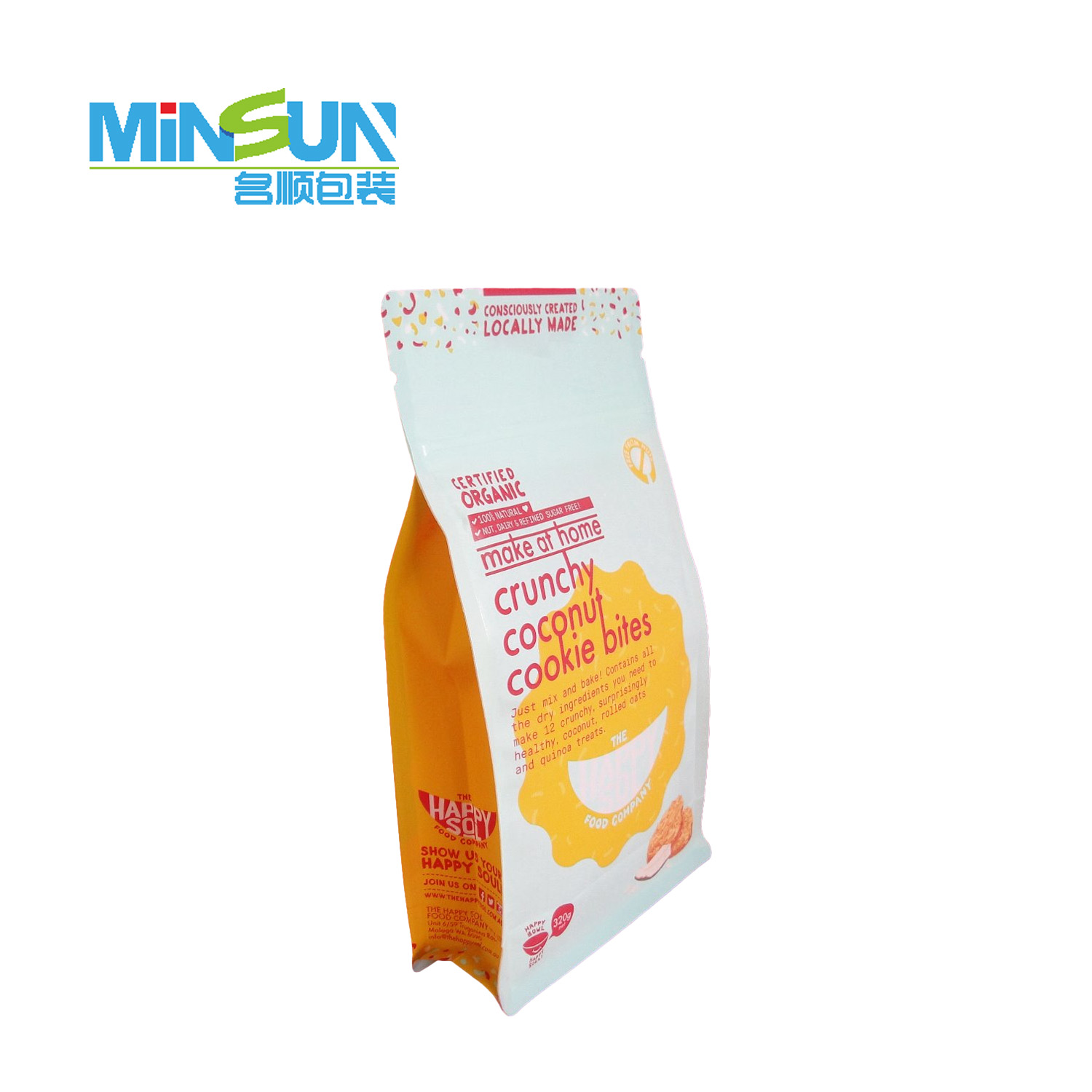
Material properties only tell half the story. The physical structure of the package dictates how you manage quality control. You must choose between outsourced bag creation and in-house film forming.
Pre-made structures arrive at your facility already formed. Your supplier handles the complex geometry and initial sealing processes.
Application Focus: The most common examples are three side seal pouches and stand-up pouches.
Decision Logic: These are best for semi-automated or manual filling operations. The supplier controls the integrity of three out of four seals. This transfers the majority of the quality control burden to the manufacturer. It dramatically reduces machine-level risk for the buyer. You only need to worry about sealing the final top edge accurately.
High-speed manufacturing requires continuous feeding materials. You form, fill, and seal the package in one fluid machine motion.
Application Focus: This process relies entirely on printed roll film.
Decision Logic: It is necessary for high-volume, automated production. It offers the lowest per-unit cost at scale.
Implementation Risk: It requires precise alignment between the film’s sealant layer activation temperature and the packaging machine’s thermal calibrations. Pressure settings must also match perfectly. Poor machinability leads to micro-leaks. If your jaws run too hot, the film burns. If they run too cold, you get weak seals.
You cannot manage what you do not measure. Relying on vendor promises invites supply chain disaster. You must implement rigorous testing frameworks to guarantee performance.
Never accept "high barrier" as a reliable metric. It is a marketing term. It holds no technical weight. Demand standardized ASTM testing data. Reliable suppliers will gladly provide documented transmission rates. If a vendor hesitates to share lab results, you should find another partner immediately.
Visual inspections fail to catch microscopic defects. You need destructive and non-destructive testing protocols. We recommend mandating the following specific tests:
Tensile Seal Strength Testing (ASTM F88): This test measures the exact force required to separate a sealed flexible material. It pulls the seal apart mechanically. It guarantees the seal meets your minimum transit requirements.
Burst & Creep Testing (ASTM F1140): This pressurizes the package internally. It simulates altitude changes during air freight. It also replicates stacking weight during warehouse logistics. If the bag pops too easily, you will face massive return rates.
Dye Penetration Testing (ASTM F1929): This identifies micro-channel leaks in seals. Technicians inject a special blue dye into the package. Visual inspections miss these channels, but the dye reveals them instantly.
Material safety remains non-negotiable. You must ensure the film structures hold relevant food-grade certifications. Look for FDA compliance in the US or strict EU regulations abroad. The manufacturing facility must adhere to Global Food Safety Initiative (GFSI) standards. Furthermore, demand strict migration testing protocols. Migration testing proves toxic chemicals from inks or adhesives do not bleed into the consumable product.
Choosing a vendor is a strategic engineering decision. You must avoid common pitfalls during the specification phase. Smart procurement strategies protect your budget and your product simultaneously.
Many brands waste capital by over-engineering their packaging. They end up paying for EVOH or pure foil when standard metallized films easily meet the 6-month shelf-life requirement. You should request cost-to-barrier ratio analyses from vendors. Compare the price increase against the actual days of shelf life gained. Do not buy a 24-month barrier for a product consumed in three weeks.
A film might test perfectly in an isolated lab environment. However, real-world production lines introduce friction, static, and variable heat. A new film may drag against metal guides. It might curl unpredictably. It may fail to seal on an aging vertical form-fill-seal (VFFS) machine. You must run physical trials on your specific equipment. Lab data does not guarantee line efficiency.
To successfully integrate a new packaging structure, follow this exact sequence:
Audit current spoilage/return rates to define the exact barrier or seal failure point. Identify exactly where your current solution fails.
Request material data sheets (MDS) and exact OTR/WVTR specs from 3-4 shortlisted suppliers. Compare their lab numbers directly.
Commission a minimum viable run (line trial) using printed roll film to test thermal tolerances before committing to bulk minimum order quantities (MOQs).
Securing the right flexible film requires a strategic mindset. You must treat packaging as an engineered solution rather than a simple commodity. Aesthetic appeal never compensates for physical failure. Balancing exact barrier specs with reliable seal functionality protects your profit margins from spoilage and costly returns. It also safeguards your brand reputation.
Your actionable next step is clear. Initiate a comprehensive packaging audit with your internal engineering team today. Alternatively, request structural samples from qualified converters to begin physical baseline testing on your production floor.
A: Seal strength is typically verified using universal testing machines following ASTM F88 standards, which pull the seal apart to measure the exact force (in Newtons or pounds) required to cause a failure.
A: Standard films generally provide basic containment and dust protection, whereas barrier films are multi-layered structures explicitly engineered to block oxygen, moisture, and light to extend shelf life.
A: Failures usually stem from a mismatch between the film's required dwell time/activation temperature and the machine's running speed, or from ink/varnish overlap entering the designated seal area during printing.
A: Foil should be specified when the product requires a zero-tolerance absolute barrier against moisture, oxygen, and UV light, and when product visibility on the shelf is not a marketing requirement.


