
- All
- Product Name
- Product Keyword
- Product Model
- Product Summary
- Product Description
- Multi Field Search


Views: 0 Author: Site Editor Publish Time: 2026-07-14 Origin: Site


Moving from unbranded to custom-printed packaging is a critical milestone for scaling brands. The printing method you choose directly impacts unit economics. It also affects brand perception and regulatory compliance. Selecting the wrong print process often leads to blown budgets. You might pay unnecessary plate fees. Poor ink adhesion on porous materials is another major risk. You can also compromise your sustainability claims easily.
This guide breaks down commercial printing technologies. We explore how you can align them to specific material requirements. You will also learn the financial realities of scaling your procurement strategy. We will detail common quality control risks and show you how to avoid them.
Flexographic printing remains the industry standard for high-volume, cost-effective runs (especially on porous kraft), while offset printing is reserved for premium, high-detail retail applications.
Industry compliance dictates ink choices: Food Kraft Paper Packaging Bags and Custom Printed Sanitary Product Paper Bags require strict adherence to migration-resistant, FDA-compliant, or medical-grade inks.
True sustainability goes beyond the paper; creating genuinely Custom Printed Recyclable Paper Bags requires specifying water-based or soy inks and avoiding non-repulpable laminates.
Evaluating industrial printing technologies requires understanding your specific volume needs. You must also weigh quality expectations against material compatibility. When sourcing Paper Packaging Bags, matching the printing method to your substrate ensures better durability. It also optimizes your budget. We will evaluate the three dominant technologies used globally.
Flexographic printing uses flexible photopolymer plates wrapped around rotating cylinders. The mechanism operates much like a modern letterpress. Ink transfers from an anilox roll onto the raised image areas of the plate. The plate then presses directly onto the moving paper web.
Flexo stands as the industry standard for high-speed, high-volume production. Simple vector logos shine here. It works beautifully on uncoated substrates like standard brown kraft. Grocery chains and large retail franchises rely heavily on flexo because the per-unit price drops drastically at scale.
However, flexo carries distinct limitations. You will face lower image resolution compared to other methods. Fine details and complex photographic images often blur. High initial plate setup costs make it tough for short runs. You must buy a separate plate for every color in your design.
Offset printing relies on the principle that water and oil repel each other. Ink transfers from a metal printing plate to a rubber blanket. It then applies to the paper. We typically print offset onto flat sheets. Bag structural conversion happens in a subsequent step.
This method remains best for photorealistic imagery. Complex gradients look incredible. Premium coated retail bags almost exclusively use offset printing. Luxury cosmetics and high-end fashion brands demand offset for perfect color fidelity.
Offset limitations center around cost and structure. It remains expensive at low volumes. Flat sheet feeding means you cannot print onto pre-made bags. Structural folding and gluing must occur after the ink dries, adding time to the production schedule.
Digital printing applies ink directly onto the substrate. It uses advanced inkjet or laser technology. You need no physical plates. The digital file routes straight to the print heads.
This method excels at prototyping. Seasonal micro-runs benefit immensely from digital flexibility. Variable data printing relies on it. Serialized QR codes or localized marketing messages are easy to swap on the fly.
Digital printing faces throughput limitations. It carries the highest per-unit cost. Slower printing speeds make it unviable for massive bulk orders. Exact Pantone (PMS) color matching struggles on brown substrates. CMYK digital inks remain somewhat translucent. They often blend poorly into dark, porous kraft paper.
Commercial Printing Methods Comparison
Printing Method | Best Suited For | Upfront Tooling Cost | Per-Unit Cost (At Scale) | Image Resolution |
|---|---|---|---|---|
Flexographic | High-volume, vector art, uncoated kraft | High (Plates required) | Very Low | Moderate |
Offset | Luxury retail, gradients, coated paper | High (Plates required) | Moderate | Very High |
Digital | Short runs, variable data, prototyping | None | High | High |
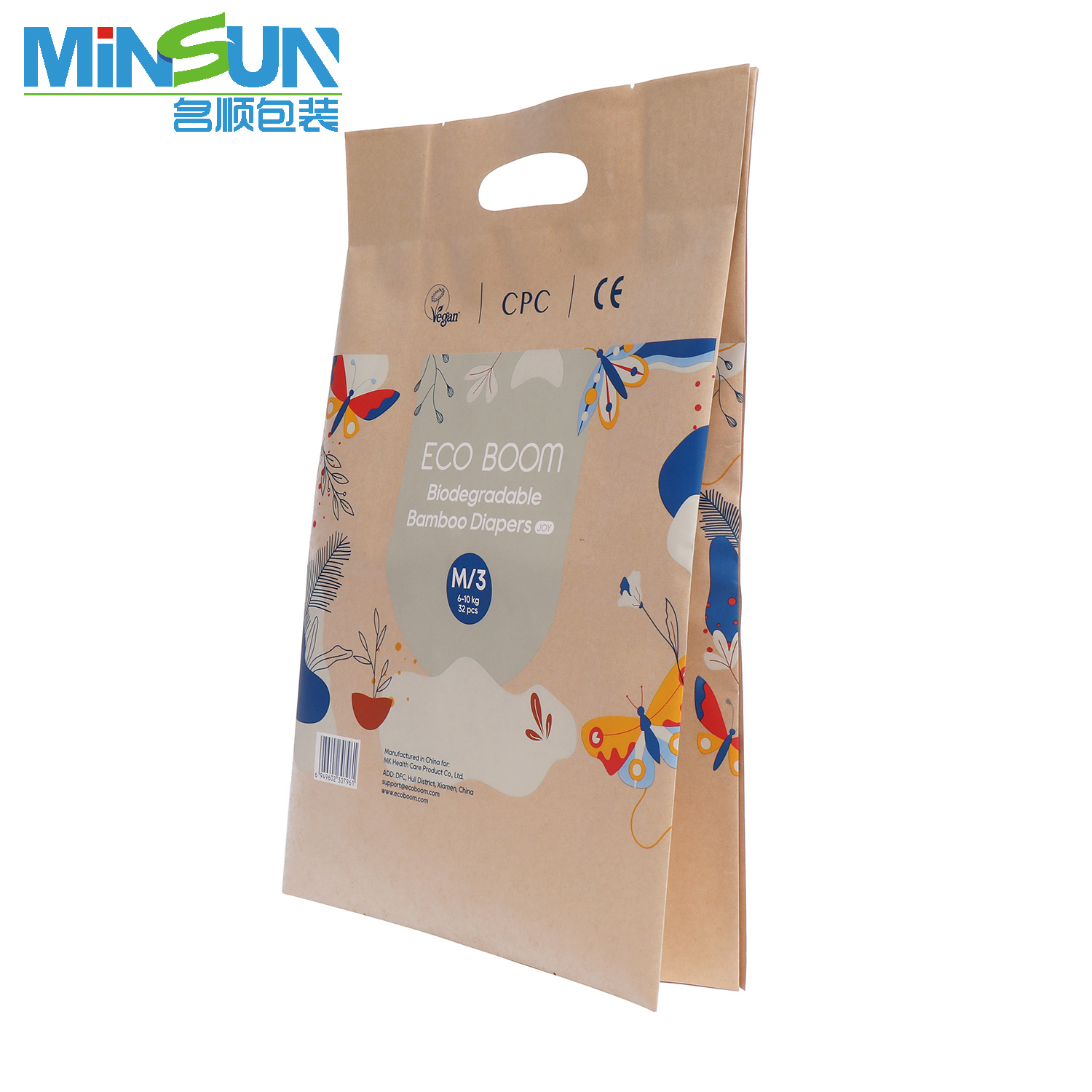
Printing is never one-size-fits-all. Material porosity dictates viable pathways. Industry regulations also limit your choices. Selecting an incompatible ink or finish often results in product recalls or regulatory fines.
Food contact materials demand intense scrutiny. You must use water-based, low-migration inks. These prevent chemical leaching into consumable goods. The FDA heavily regulates packaging materials touching baked goods, coffee, or snacks. Direct food contact requires specific certified inks.
Flexo dominates this space. Water-based flexo inks absorb well into porous materials. However, colors often appear muted on natural brown kraft. Design your Food Kraft Paper Packaging Bags carefully. You must account for ink absorption. The dark substrate naturally alters lighter shades. Always use bold, high-contrast designs for food kraft.
Strict hygiene standards define medical and sanitary packaging. You often need sterilization compatibility. Autoclave-safe inks are common in medical settings. Tear-resistant medical-grade paper is essential for maintaining product integrity.
We execute this using precision flexo or offset. You need zero-VOC, heavy-metal-free inks to prevent contamination. Print facilities producing Custom Printed Sanitary Product Paper Bags often require ISO cleanroom certifications. Quality control must document every batch to ensure continuous compliance.
Shipping mailers endure severe abuse. Scuff resistance during transit is mandatory. Friction on sorting conveyor belts easily ruins unprotected ink.
Post-print UV coating helps immensely. Specialized curing processes prevent ink transfer. Curing locks the pigments onto the paper fibers. You should always test e-commerce mailers for abrasion resistance before launching a new design.
Marketing a brand as eco-friendly demands verifiable supply chain choices. Chemical application is heavily scrutinized. Consumers quickly identify greenwashing. True sustainability involves the entire lifecycle of the bag.
Ink selection requires strict mandates. Demand soy-based or algae-based inks over traditional petroleum-based options. Recycling facilities can easily de-ink these formulas. This ensures you create genuinely Custom Printed Recyclable Paper Bags. Petroleum inks often leave toxic sludge behind during the repulping process.
Finish restrictions are equally important. You must avoid specific decorative elements. Avoid UV spot gloss. Skip metallic foils. Plastic-based laminates ruin recyclability entirely. Biaxially Oriented Polypropylene (BOPP) lamination instantly renders paper non-compostable and unrecyclable.
Look for FSC-certified paper stock. The Forest Stewardship Council ensures sustainable harvesting. Combine it alongside verifiable ASTM D6868 compliance. This guarantees safe compostability in municipal facilities.
Buyers must understand the financial assumptions behind printing quotes. Transparency helps you plan better. Let us break down the pricing structures dictating commercial procurement.
Volume vs. Setup Fees
Tooling costs and unit prices share an inverse relationship. Flexo plates cost hundreds of dollars per color. High Minimum Order Quantities (MOQs) help amortize these costs. Most facilities demand 10,000 units minimum for inline flexo. If you order 500 bags, the plate fee alone might double your per-bag price. If you order 50,000 bags, the plate fee becomes negligible.
Color Complexity
Every extra color requires a separate plate. It also needs an independent print station on the press. Single-color designs reduce upfront capital risk drastically. Two-color designs offer a safe middle ground. Full CMYK (four-color) printing demands precise registration and four unique plates, significantly raising initial investment.
Pre-Made vs. Inline Printing
How the bag travels through the machine alters your options.
Post-printing (Pre-made blanks): We print onto pre-manufactured blank bags. This allows for low MOQs (often 500 units). However, it limits your print area. You cannot print edge-to-edge. You cannot print inside the side gussets. The machinery must grip the edges, leaving an unprinted margin.
Inline printing (Raw rolls): We print on paper rolls before cutting and folding. This allows 100% surface coverage. You can design stunning edge-to-edge artwork. You can hide logos in the gussets. The tradeoff is volume. Inline demands high MOQs because threading a massive roll of paper through a press requires substantial setup time.
Mistakes happen during mass production. Buyers must actively protect themselves. Knowing what goes wrong helps you communicate better expectations to your manufacturing partner.
Color Shift on Uncoated Kraft: CMYK inks remain translucent. Printing on brown paper alters the final hue. For example, yellow ink on brown paper appears muddy green or brown.
Risk Mitigation: Use opaque white underprinting. The press lays down a white silhouette first, then prints colors on top. Alternatively, stick to dark, high-contrast spot colors like navy or black.
Registration Errors: Misaligned color plates cause blurry edges. Overlapping colors look unprofessional. High-speed flexo presses occasionally drift out of alignment.
Risk Mitigation: Design using trapping techniques. Trapping creates a tiny overlap between adjacent colors. Avoid thin multi-color knockouts where precise alignment is mandatory.
Ink Rub-Off (Crocking): Inadequate curing ruins designs. Highly porous recycled paper absorbs poorly dried ink. Customers end up with ink on their hands or clothes.
Risk Mitigation: Request a Sutherland rub test. Do this during the sampling phase. This standardized test rubs a weighted block across the printed surface to simulate transit friction.
Printing custom paper bags requires balance. You must weigh aesthetic ambition against physical substrate limitations. Unit economics will guide your final choice. Flexo rules high-volume bulk runs, while offset dominates luxury retail. Digital serves short-term prototyping needs perfectly.
Evaluate vendors beyond mere pricing. Assess their equipment capabilities honestly. Check their ink compliance for food or sanitary safety. Demand proof of sustainable practices if you market eco-friendly claims. Ensure they can scale alongside your brand.
Never commit to a bulk run blindly. Request a physical printed proof first. A pre-production sample on exact paper stock is mandatory. Verify color accuracy and structural integrity before mass production. Taking this extra step saves thousands of dollars in potential reprints.
A: Yes, but it requires inline printing on raw paper rolls before the bag is folded and glued. This method allows full surface coverage. Because it uses large rolls, inline printing typically carries a higher Minimum Order Quantity (MOQ).
A: Flexography is the most common and cost-effective method. Designs should utilize dark, bold colors like black, navy, or forest green. The brown substrate alters lighter, translucent inks, making them look muddy. White underprinting can help brighter colors pop.
A: Reputable manufacturers use FDA-approved, water-based, low-migration inks for food-contact packaging. These prevent chemicals from bleeding into the food. Buyers must explicitly request documentation and certifications for this compliance during procurement.
A: For flexo and offset printing, a physical plate is created for every color in your design. This is a one-time setup fee. Reorders of the exact same design will not incur this tooling cost again.


