
- All
- Product Name
- Product Keyword
- Product Model
- Product Summary
- Product Description
- Multi Field Search
Views: 0 Author: Site Editor Publish Time: 2026-07-28 Origin: Site


Food packaging plays a highly critical role in today's demanding retail landscape. It must balance shelf-life preservation, strict regulatory compliance, and attractive brand presentation. Many consumer brands prioritize transitioning to paper-based materials. They do this to meet aggressive global sustainability demands. However, choosing poorly specified materials creates immense risk. It often leads to unexpected product spoilage. You might experience unsightly oil bleed-through on retail shelves. It can also trigger serious operational bottlenecks during production. This creates friction you simply cannot afford. Our goal is to provide you with a comprehensive, evidence-based evaluation framework. We will help your procurement and product development teams systematically evaluate their options. You will learn how to select the exact materials required for your specific food application, production scale, and safety compliance needs. By understanding these technical variables, you can confidently protect your product while avoiding common material failures on the retail shelf.
The biological and physical characteristics of your food (moisture content, oils, weight) strictly dictate the required barrier coatings and paper weight.
Food Kraft Paper Packaging Bags offer excellent durability and branding, but raw kraft requires specific polymer or aqueous linings for direct food contact.
Selecting bag structures (e.g., block bottom vs. pinch bottom) impacts not only retail display but also automated filling line efficiency.
True sustainability in Food Packaging Bags requires balancing compostability/recyclability claims against the reality of barrier coatings and local waste infrastructure.
Business framing remains critical when evaluating packaging supplies. Protection stands as the primary function of any food container. You must select the precise material specification. Choosing incorrect materials compromises product integrity rapidly. It also increases costly retail return rates. You need a structural approach to sourcing. Let us examine specific food categories in detail. Their inherent physical traits strictly dictate your packaging needs.
Dry & Powdery Goods (Flour, Sugar, Pasta): These heavy goods demand extremely high tensile strength. Bags must resist bursting during rough transit handling. We recommend dense, multi-ply kraft materials for flour or sugar. You only need moderate moisture barriers here. Powdered products rarely leak aggressive oils. However, ambient humidity easily causes clumping. A light inner coating prevents external moisture ingress effectively.
Greasy & High-Fat Foods (Baked goods, Coffee beans, Fried items): Fats destroy unprotected paper structures rapidly. You must deploy high grease-resistance solutions. Greaseproof paper provides a baseline defense for short-term bakery items. Polylactic Acid (PLA) or Polyethylene (PE) linings offer much stronger protection. They prevent unsightly exterior oil staining completely. They also stop invisible oxygen ingress. Oxygen makes high-fat foods turn rancid incredibly fast. We strongly advise rigorous barrier testing for freshly roasted coffee.
Moisture-Sensitive Foods (Jerky, Dried Fruit, Spices): These items easily absorb ambient humidity from the air. They also suffer from rapid oxidation over time. You require absolute high-barrier linings. Standard paper allows moisture vapor transmission continuously. Metalized films or thick PE layers trap internal moisture. They keep jerky tender and spices intensely aromatic.
You face a crucial decision point early in this process. Define your exact shelf-life requirements first. Does your product sit on shelves for days or months? Short-life bakery items forgive simple, uncoated materials. Long-life retail spices demand complex, multi-layer structures. We suggest mapping your maximum transit times carefully. Do this before you begin evaluating Paper Packaging Bags from various suppliers.
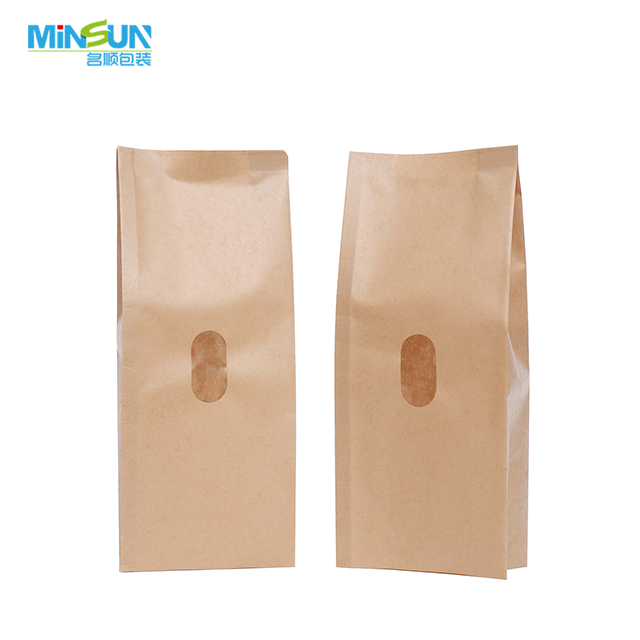
Core paper substrates vary significantly in performance. Raw paper rarely suffices alone for complex food applications. You must understand substrate differences before committing to large purchases.
Natural unbleached paper projects a rustic, eco-friendly perception. Consumers trust its organic, earthy appearance. It also boasts immense structural durability due to longer raw fibers. However, it absorbs liquid inks unpredictably. Colors appear muted on natural brown surfaces. Bleached white kraft solves this specific printing issue entirely. It delivers superior high-fidelity brand graphics. Chemical bleaching treatments alter the natural fibers slightly. You must review these treatments for direct food contact safety. Our experience shows bleached kraft wins consistently for vibrant retail shelves.
Greaseproof and glassine papers offer alternative approaches. This material undergoes heavy calendering during manufacturing. Heated steel rollers compress the paper fibers incredibly tightly. This mechanical process naturally resists oil penetration. It avoids heavy polymer coatings entirely. Glassine works beautifully for short-term bakery items. Consumers can usually compost it easily.
Long-term food storage mandates specialized inner linings. Standard Food Kraft Paper Packaging Bags fail without them. You face significant implementation risks otherwise. Let us compare the most common barrier technologies available today.
Coating Material | Grease Resistance | Moisture Barrier | Environmental Profile |
|---|---|---|---|
Polyethylene (PE) | Very High | Very High | Highly effective and cost-efficient. Non-recyclable natively; requires specialized municipal sorting. |
Polylactic Acid (PLA) | Moderate to High | Moderate | Industrial compostable. Sourced from renewable plant starches. Higher cost. |
Aqueous (Water-Based) | Low to Moderate | Low | Often recyclable and compostable. Best suited for dry goods and short shelf-life applications. |
You must weigh cost against environmental impact carefully. Traditional PE linings remain the industry standard for durability. PLA offers a greener alternative but demands industrial composting facilities. Aqueous coatings provide true recyclability but sacrifice long-term moisture protection.
Bag architecture heavily dictates both form and function. Shelf presence matters immensely for consumer sales. Operational realities on your packaging line matter equally. You must balance both dimensions carefully during procurement.
Different bag shapes serve entirely different retail environments. You should match the structure to your specific operational workflow.
Block Bottom (SOS) Bags: These stand upright independently on retail shelves. They dominate supermarket aisles beautifully. Manual filling teams love their stable, flat base. It leaves both hands free to pour product safely. Semi-automated filling lines process them highly efficiently.
Stand-Up Pouches (Doypack style): These utilize a complex hybrid construction typically. A kraft exterior houses a high-barrier foil or poly interior. They deliver a premium consumer aesthetic instantly. High-margin retail brands prefer them heavily. A bottom gusset expands outward to provide excellent stability.
Pinch Bottom / Flat Bags: These offer extreme cost efficiency for high-volume operations. They save massive storage space in crowded warehouses. Single-serve items fit them perfectly. Fast-food applications rely on their quick-loading design. You simply slide the product in and fold the top.
Multi-use products require robust, consumer-friendly closure mechanisms. You must evaluate how customers interact post-purchase.
Tin ties: Consumers fold and seal them easily. They work exceptionally well for short-term coffee or pastry storage.
Resealable zippers: These offer superior convenience and freshness retention. They lock out harmful oxygen after initial opening. Consumers highly value zipper closures for premium snacks.
Heat seals: Automated lines deploy these for vital tamper evidence. They guarantee absolute safety before retail purchase. You can combine heat seals above a zipper for dual protection.
We constantly remind buyers to verify dimensions. Your Food Packaging Bags must fit your specific machinery perfectly. Check opening styles against your hopper specifications. Automated filling machinery jams incredibly easily. Minor sizing errors cause major production delays. Always order small test batches before committing to mass production.
Transitioning to paper involves strict regulatory oversight globally. You cannot simply use generic industrial kraft paper. Food safety standards demand uncompromising attention. We rely on established authoritative frameworks to guide these decisions.
You must verify direct food contact compliance rigorously. The FDA in the US regulates these materials strictly. The EFSA provides similar, often stricter, oversight in Europe. Substrates must never leach harmful chemicals into food products. We must discuss the ongoing global phase-out of PFAS. Manufacturers used these "forever chemicals" for grease resistance historically. Global regulations now ban them increasingly due to health concerns. You must always demand formal PFAS-free certifications from your suppliers.
Many well-meaning brands fall into "greenwashing" traps accidentally. True sustainability requires honest, transparent material assessments. Multi-layer paper bags blend paper, plastic, and foil seamlessly. These complex structures are generally not curbside recyclable. Local recycling facilities simply cannot separate the bonded layers mechanically. You must communicate proper disposal instructions clearly to your consumers.
We highly advise sourcing FSC-certified paper consistently. The Forest Stewardship Council guarantees responsible, sustainable forestry practices. This critical certification protects global forests actively. It ensures new trees replace harvested ones systematically. It also satisfies environmentally conscious consumers effectively. Promoting FSC certification elevates your brand trust significantly.
Moving from theoretical evaluation to active sourcing requires operational diligence. You must mitigate purchasing risks actively. The transition from digital design to physical manufacturing uncovers many hidden challenges.
Porous kraft paper absorbs liquid inks very quickly. Flexographic printing works well for simple logos and vector graphics. Digital printing handles complex gradients slightly better. However, colors often mute significantly on uncoated surfaces. Deep blacks require double passes or specific primer treatments. Metallic inks lose their signature shine on rough, unbleached paper. We heavily recommend reviewing printed physical proofs before approving mass production. Never rely solely on a computer monitor for color matching.
Packaging suppliers dictate MOQ tiers based on your customization requirements. You must align these tiers with your cash flow.
Stock bags: These offer low MOQs generally. You enjoy fast, reliable lead times. You can apply custom printed labels in-house easily. This approach perfectly suits pilot launches or seasonal products.
Fully custom printed bags: These demand high MOQs universally. Tooling and printing plate costs increase your initial investments. Lead times stretch out significantly due to custom manufacturing runs. Reserve this option for established, high-volume product lines.
Follow this exact progression to guarantee safe, efficient procurement:
Request physical samples for a manual "fill and seal" test. Observe how the material handles your specific product weight.
Conduct a 30-day shelf-life pilot testing barrier efficacy. Expose the packaged product to varied temperature and humidity conditions.
Verify supplier certifications (ISO, GFSI, FSC) strictly before finalizing annual contracts. Request updated documentation annually.
Choosing correct paper food packaging represents a highly technical balancing act. You must constantly align material strength, chemical barrier properties, and strict regulatory compliance. Minor oversights in material specification cause major supply chain disruptions eventually. You cannot afford product recalls due to migrating chemicals or failing seals. We emphasize prioritizing real-world stress testing over theoretical factory specifications. Laboratory data rarely perfectly matches harsh warehouse conditions.
We encourage you to contact a specialized packaging engineer today. Request physical material samples immediately to begin your evaluation. Conduct a rigorous structural audit of your current packaging strategy. Protecting your food product ensures you protect your brand reputation simultaneously.
A: No. They must be manufactured in certified facilities and use FDA/EFSA-approved substrates and food-safe inks/adhesives.
A: Only if equipped with an appropriate high-barrier lining like PLA, PE, or aluminum foil to prevent oil migration and oxygen exposure.
A: Recyclable requires pure paper or easily separable layers; compostable typically involves industrial-compostable linings like PLA. Most lined bags are neither without specialized processing.
A: Measure by product volume and density, not just weight. Always account for headspace required for heat sealing and gas flushing.


